Keto Seared Tuna Steak
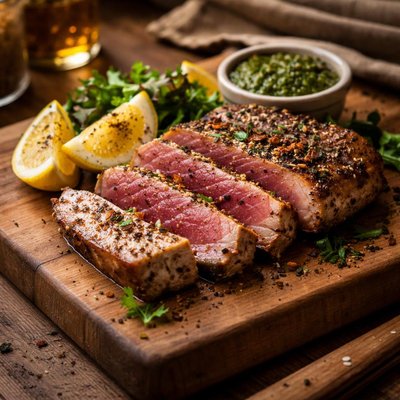
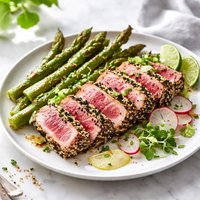
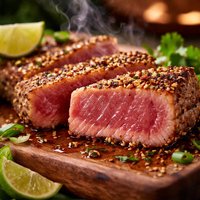
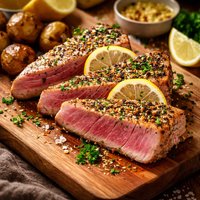
Elevate your low-carb dining with this mouthwatering Keto Seared Tuna Steak recipe, a perfect fusion of simplicity and elegance. In just 16 minutes, you can create a high-protein, low-carb meal that highlights the rich, buttery flavor of ahi tuna. Coated in a visually stunning blend of black and white sesame seeds and lightly seasoned with garlic, sea salt, and pepper, each steak is seared to perfection for a tender, melt-in-your-mouth experience. A zesty squeeze of fresh lemon juice and a sprinkle of chopped parsley provide a vibrant finish, making this dish as flavorful as it is nutritious. Serve these seared tuna steaks with a refreshing low-carb salad or steamed greens for a restaurant-quality keto meal at home.

Smart Nutrition Tracking with SnapCalorie

Recipe Information
Ingredients
- 2 pieces Ahi tuna steaks
- 2 tablespoons Black sesame seeds
- 2 tablespoons White sesame seeds
- 0.5 teaspoon Sea salt
- 0.5 teaspoon Black pepper
- 0.5 teaspoon Garlic powder
- 2 tablespoons Olive oil
- 1 whole Lemon
- 2 tablespoons Fresh parsley
Instructions
Pat the tuna steaks dry with paper towels. Season both sides with sea salt, black pepper, and garlic powder.
On a plate, combine black sesame seeds and white sesame seeds. Dredge the tuna steaks in the sesame seed mixture, pressing gently to ensure the seeds adhere to the tuna.
Heat olive oil in a large skillet over medium-high heat until shimmering.
Add the tuna steaks to the skillet and sear for about 1-3 minutes per side, depending on your preferred level of doneness. For rare tuna, aim for about 1 minute per side.
Remove the tuna steaks from the skillet and let rest for a minute.
Slice the lemon in half and squeeze the juice over the seared tuna steaks.
Finely chop the fresh parsley and sprinkle it over the tuna before serving.
Serve immediately either on its own or with a low-carb salad or steamed greens.
Nutrition Facts
Calories |
403 | ||
|---|---|---|---|
% Daily Value* |
|||
| Total Fat | 22.2 g | 28% | |
| Saturated Fat | 3.4 g | 17% | |
| Polyunsaturated Fat | 0.0 g | ||
| Cholesterol | 60 mg | 20% | |
| Sodium | 566 mg | 25% | |
| Total Carbohydrate | 10.0 g | 4% | |
| Dietary Fiber | 3.7 g | 13% | |
| Total Sugars | 1.6 g | ||
| Protein | 42.5 g | 85% | |
| Vitamin D | 5.9 mcg | 29% | |
| Calcium | 181 mg | 14% | |
| Iron | 4.8 mg | 26% | |
| Potassium | 788 mg | 17% | |
*The % Daily Value tells you how much a nutrient in a serving of food contributes to a daily diet. 2,000 calories a day is used for general nutrition advice.


