Keto Seared Ahi Tuna
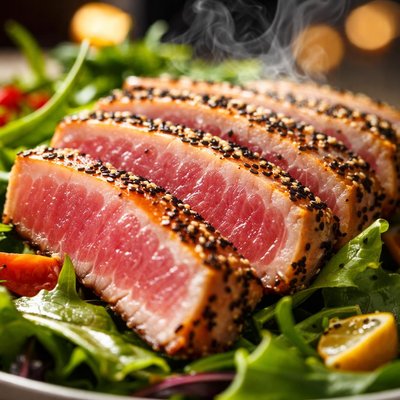
Elevate your low-carb dining experience with this Keto Seared Ahi Tuna recipe, a quick and gourmet-worthy dish that’s as healthy as it is delicious. Perfectly seared ahi tuna steaks are crusted with a blend of white and black sesame seeds for a nutty crunch and elegant presentation, while remaining tender and juicy on the inside. This keto-friendly recipe is paired with a zesty dipping sauce made with coconut aminos, lime juice, ginger, garlic, and a hint of wasabi for a flavorful kick. Ready in just 15 minutes and bursting with protein and healthy fats, this dish is ideal for a quick lunch, dinner, or fancy appetizer. Tantalize your taste buds with this easy-to-make, low-carb delight!

Smart Nutrition Tracking with SnapCalorie

Recipe Information
Ingredients
- 2 pieces Ahi tuna steaks
- 2 tablespoons White sesame seeds
- 2 tablespoons Black sesame seeds
- 2 tablespoons Avocado oil
- 0.5 teaspoons Salt
- 0.5 teaspoons Black pepper
- 2 tablespoons Coconut aminos
- 1 tablespoon Lime juice
- 1 teaspoon Grated ginger
- 1 teaspoon Minced garlic
- 0.5 teaspoons Wasabi paste
Instructions
Pat the ahi tuna steaks dry with paper towels. Season both sides with salt and black pepper.
On a plate, mix together the white and black sesame seeds.
Press each side of the tuna steaks into the sesame seeds, ensuring an even coating.
Heat the avocado oil in a non-stick skillet over medium-high heat.
Once the oil is hot, carefully place the sesame-coated tuna steaks in the skillet.
Sear the tuna steaks for about 1 to 1.5 minutes per side, depending on your preferred level of doneness. For rare, cook for 1 minute; for medium-rare, cook for 1.5 minutes.
Remove the tuna from the skillet and let rest for a minute before slicing.
In a small bowl, combine the coconut aminos, lime juice, grated ginger, minced garlic, and wasabi paste to make the dipping sauce.
Slice the tuna steaks and serve immediately with the dipping sauce on the side.
Nutrition Facts
Calories |
410 | ||
|---|---|---|---|
% Daily Value* |
|||
| Total Fat | 22.6 g | 29% | |
| Saturated Fat | 3.5 g | 18% | |
| Polyunsaturated Fat | 0.0 g | ||
| Cholesterol | 60 mg | 20% | |
| Sodium | 906 mg | 39% | |
| Total Carbohydrate | 9.7 g | 4% | |
| Dietary Fiber | 1.9 g | 7% | |
| Total Sugars | 3.5 g | ||
| Protein | 41.7 g | 83% | |
| Vitamin D | 5.9 mcg | 29% | |
| Calcium | 158 mg | 12% | |
| Iron | 3.8 mg | 21% | |
| Potassium | 704 mg | 15% | |
*The % Daily Value tells you how much a nutrient in a serving of food contributes to a daily diet. 2,000 calories a day is used for general nutrition advice.


