
Keto Pulled Chicken
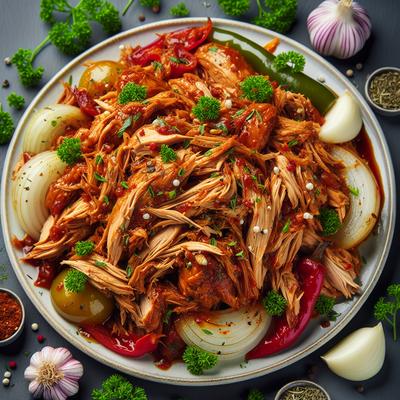
Savor the irresistible flavor of Keto Pulled Chicken, a slow-cooked masterpiece perfect for low-carb enthusiasts. This tender and juicy dish begins with boneless, skinless chicken breasts bathed in a flavorful blend of chicken broth, apple cider vinegar, olive oil, and bold seasonings like smoked paprika, garlic powder, and onion powder. Enhanced with Dijon mustard, Worcestershire sauce, and a touch of liquid stevia, every bite is perfectly balanced between smoky, tangy, and slightly sweet. With just 10 minutes of prep and slow-cooking magic, this easy keto recipe delivers a protein-packed meal that’s ideal for meal prep or weeknight dinners. Serve it warm on keto buns or alongside a refreshing coleslaw for a satisfying, guilt-free dinner. Perfect for keto, paleo, and low-carb diets, this recipe shines with effortless comfort and bold flavors!

Log this recipe in SnapCalorie

Recipe Information
Ingredients
- 2 pounds boneless, skinless chicken breasts
- 1 cup chicken broth
- 2 tablespoons apple cider vinegar
- 2 tablespoons olive oil
- 1 teaspoon smoked paprika
- 1 teaspoon garlic powder
- 1 teaspoon onion powder
- 0.5 teaspoon sea salt
- 0.5 teaspoon black pepper
- 1 tablespoon dijon mustard
- 10 drops liquid stevia
- 1 tablespoon worcestershire sauce
Instructions
Place the chicken breasts at the bottom of a slow cooker.
In a mixing bowl, whisk together chicken broth, apple cider vinegar, olive oil, smoked paprika, garlic powder, onion powder, sea salt, black pepper, dijon mustard, liquid stevia, and worcestershire sauce until well combined.
Pour the mixture over the chicken breasts in the slow cooker.
Cover the slow cooker with the lid and cook on low heat for 4 hours.
Once cooked, use two forks to shred the chicken directly in the slow cooker. Ensure all chicken is well coated with the sauce at the bottom.
Serve the keto pulled chicken warm, optionally with keto-friendly coleslaw or on keto buns.
Nutrition Facts
Calories |
1842 | ||
|---|---|---|---|
% Daily Value* |
|||
| Total Fat | 64.0 g | 82% | |
| Saturated Fat | 13.5 g | 68% | |
| Polyunsaturated Fat | 2.7 g | ||
| Cholesterol | 771 mg | 257% | |
| Sodium | 2950 mg | 128% | |
| Total Carbohydrate | 10.4 g | 4% | |
| Dietary Fiber | 1.7 g | 6% | |
| Total Sugars | 2.6 g | ||
| Protein | 285.7 g | 571% | |
| Vitamin D | 0.2 mcg | 1% | |
| Calcium | 163 mg | 13% | |
| Iron | 10.9 mg | 61% | |
| Potassium | 2791 mg | 59% | |
*The % Daily Value tells you how much a nutrient in a serving of food contributes to a daily diet. 2,000 calories a day is used for general nutrition advice.


