Keto Praline Pecans
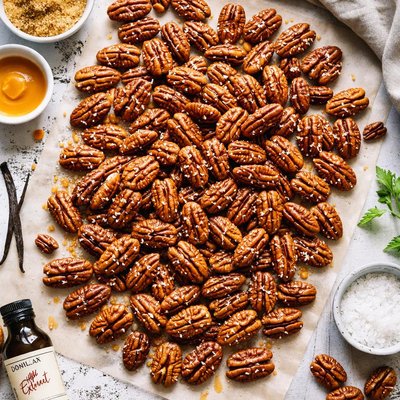
Indulge in the perfect combination of crunch and sweetness with this irresistible Keto Praline Pecans recipe! Featuring buttery caramel-coated pecan halves, this low-carb treat is made with granulated erythritol to keep it sugar-free and keto-friendly. Infused with warm cinnamon and a hint of vanilla, these praline pecans are baked to golden perfection, resulting in a crisp yet melt-in-your-mouth texture that’s hard to resist. Ready in just 25 minutes, this quick and easy recipe is ideal for satisfying your sweet tooth or gifting during the holidays. Serve as a guilt-free snack, use them to top desserts, or enjoy them straight out of the jar—these delicious pecans are perfect for any occasion!

Smart Nutrition Tracking with SnapCalorie

Explore More





Recipe Information
Ingredients
- 2 cups Raw pecan halves
- 4 tablespoons Unsalted butter
- 1 cup Granulated erythritol
- 1 teaspoon Vanilla extract
- 1 teaspoon Ground cinnamon
- 0.25 teaspoon Salt
Instructions
Preheat your oven to 300°F (150°C) and line a baking sheet with parchment paper.
In a medium saucepan over medium heat, melt the unsalted butter.
Add the granulated erythritol to the melted butter and stir until it begins to dissolve.
Stir in the vanilla extract, ground cinnamon, and salt, mixing well to combine.
Add the raw pecan halves to the saucepan, tossing to coat them thoroughly in the butter and erythritol mixture.
Pour the coated pecans onto the prepared baking sheet, spreading them out in an even layer.
Bake in the preheated oven for 12-15 minutes, or until the pecans are golden and fragrant.
Remove from the oven and allow the pecans to cool completely on the baking sheet. They will crisp up as they cool.
Once cooled, store the praline pecans in an airtight container for up to one week.
Nutrition Facts
Calories |
254 | ||
|---|---|---|---|
% Daily Value* |
|||
| Total Fat | 26.2 g | 34% | |
| Saturated Fat | 5.4 g | 27% | |
| Polyunsaturated Fat | 0.0 g | ||
| Cholesterol | 15 mg | 5% | |
| Sodium | 61 mg | 3% | |
| Total Carbohydrate | 29.2 g | 11% | |
| Dietary Fiber | 2.9 g | 10% | |
| Total Sugars | 1.2 g | ||
| Protein | 2.7 g | 5% | |
| Vitamin D | 0.1 mcg | 0% | |
| Calcium | 25 mg | 2% | |
| Iron | 0.7 mg | 4% | |
| Potassium | 119 mg | 3% | |
*The % Daily Value tells you how much a nutrient in a serving of food contributes to a daily diet. 2,000 calories a day is used for general nutrition advice.


