Keto Penne Bolognese
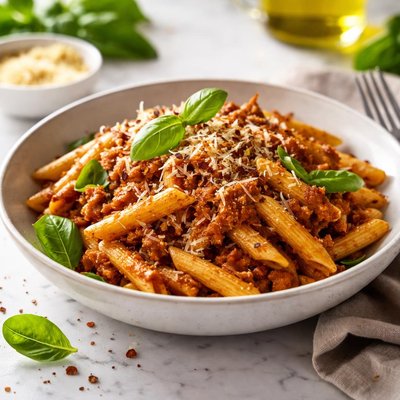
Indulge in the hearty, comforting flavors of **Keto Penne Bolognese**, a low-carb twist on the Italian classic. This recipe features a rich, slow-simmered Bolognese sauce made with ground beef, aromatic onion and garlic, and vibrant herbs like oregano and basil. Instead of traditional pasta, it’s paired with tender, keto-friendly zucchini penne, making it perfect for those following a low-carb or gluten-free lifestyle. Finished with a sprinkle of freshly grated Parmesan cheese, this dish delivers bold, satisfying flavors with just 15 minutes of prep time. Perfect for busy weeknights or family dinners, this keto-friendly adaptation ensures you can enjoy the indulgence of Italian cuisine without compromising your healthy eating goals.

Smart Nutrition Tracking with SnapCalorie

Recipe Information
Ingredients
- 2 tablespoons olive oil
- 1 pound ground beef
- 0.5 medium onion, chopped
- 2 cloves garlic, minced
- 1 stalk celery, chopped
- 2 tablespoons tomato paste
- 14 ounces canned crushed tomatoes
- 1 teaspoon dried oregano
- 1 teaspoon dried basil
- 0.5 teaspoon salt
- 0.25 teaspoon black pepper
- 8 ounces zucchini penne (keto-friendly pasta)
- 0.25 cup Parmesan cheese, grated
Instructions
Heat the olive oil in a large skillet over medium heat.
Add the chopped onion and garlic, and sauté until the onion is translucent, about 3-4 minutes.
Add the ground beef to the skillet, breaking it apart with a spoon, and cook until browned, about 5-7 minutes.
Stir in the chopped celery, tomato paste, and crushed tomatoes.
Add the dried oregano, dried basil, salt, and black pepper, mixing well.
Reduce the heat to low and let the sauce simmer for about 30 minutes, stirring occasionally until the flavors meld together.
Meanwhile, cook the zucchini penne according to the package instructions, then drain and set aside.
Once the Bolognese sauce is ready, toss it with the cooked zucchini penne until the pasta is well coated.
Serve the Keto Penne Bolognese with freshly grated Parmesan cheese on top.
Nutrition Facts
Calories |
431 | ||
|---|---|---|---|
% Daily Value* |
|||
| Total Fat | 31.7 g | 41% | |
| Saturated Fat | 10.9 g | 54% | |
| Polyunsaturated Fat | 0.0 g | ||
| Cholesterol | 81 mg | 27% | |
| Sodium | 543 mg | 24% | |
| Total Carbohydrate | 12.5 g | 5% | |
| Dietary Fiber | 2.9 g | 10% | |
| Total Sugars | 7.4 g | ||
| Protein | 23.4 g | 47% | |
| Vitamin D | 0.2 mcg | 1% | |
| Calcium | 117 mg | 9% | |
| Iron | 3.5 mg | 20% | |
| Potassium | 658 mg | 14% | |
*The % Daily Value tells you how much a nutrient in a serving of food contributes to a daily diet. 2,000 calories a day is used for general nutrition advice.


