Keto Peanut Butter Milkshake
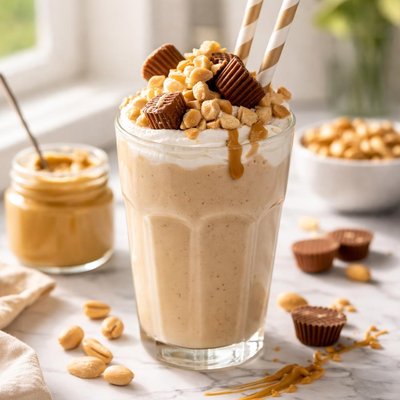
Indulge in the creamy decadence of a Keto Peanut Butter Milkshake—a guilt-free treat designed to satisfy your sweet cravings while staying low-carb. This recipe combines the rich nuttiness of creamy peanut butter with the smoothness of heavy cream and unsweetened almond milk, perfectly sweetened with erythritol for a keto-friendly twist. Enhanced with a touch of vanilla and a hint of salt to balance the flavors, this milkshake achieves a frosty, thick texture with the addition of ice cubes, making it the ultimate refreshing dessert or snack. Ready in just 5 minutes, it’s perfect for busy keto enthusiasts seeking a quick, delicious, and satisfying pick-me-up. Whether you’re enjoying it solo or sharing with a fellow peanut butter lover, this shake promises a burst of flavor in every sip!

Smart Nutrition Tracking with SnapCalorie

Explore More
Recipe Information
Ingredients
- 1 cup Unsweetened almond milk
- 0.25 cup Heavy cream
- 2 tablespoons Creamy peanut butter
- 2 tablespoons Erythritol (or preferred keto-friendly sweetener)
- 1 teaspoon Vanilla extract
- 1 cup Ice cubes
- 0.125 teaspoon Salt
Instructions
Place the unsweetened almond milk, heavy cream, creamy peanut butter, erythritol, and vanilla extract in a blender.
Add the cup of ice cubes to the blender to give your milkshake a frosty and thick consistency.
Sprinkle in 1/8 teaspoon of salt to enhance the flavors and balance the sweetness.
Blend on high speed for about 1-2 minutes or until all ingredients are well combined and the mixture is smooth and creamy.
Taste and adjust sweetness if necessary by adding more erythritol, blending again briefly to combine.
Once satisfied with the taste and consistency, pour the milkshake into two glasses.
Serve immediately and enjoy your refreshing, keto-friendly peanut butter milkshake!
Nutrition Facts
Calories |
217 | ||
|---|---|---|---|
% Daily Value* |
|||
| Total Fat | 19.1 g | 25% | |
| Saturated Fat | 7.5 g | 37% | |
| Polyunsaturated Fat | 0.0 g | ||
| Cholesterol | 30 mg | 10% | |
| Sodium | 286 mg | 12% | |
| Total Carbohydrate | 16.4 g | 6% | |
| Dietary Fiber | 1.5 g | 5% | |
| Total Sugars | 1.8 g | ||
| Protein | 4.5 g | 9% | |
| Vitamin D | 1.2 mcg | 6% | |
| Calcium | 235 mg | 18% | |
| Iron | 0.6 mg | 3% | |
| Potassium | 120 mg | 3% | |
*The % Daily Value tells you how much a nutrient in a serving of food contributes to a daily diet. 2,000 calories a day is used for general nutrition advice.


