Keto Japanese Cheesecake
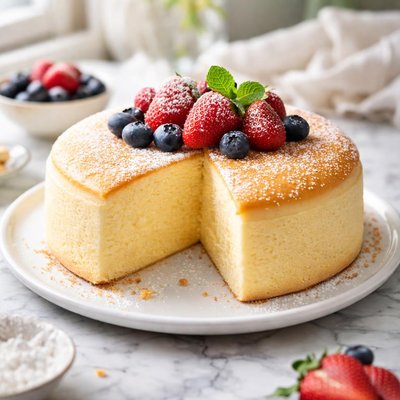
Indulge in the irresistible fluffiness of Keto Japanese Cheesecake, a low-carb twist on the classic dessert known for its delicate, cloud-like texture. This recipe combines the creamy richness of cream cheese, the subtle nuttiness of almond flour, and the natural sweetness of granulated erythritol to create a keto-friendly treat that melts in your mouth. Expertly baked in a water bath for ultimate softness, the cheesecake achieves the perfect balance of lightness and decadence. Enhanced with notes of vanilla and a touch of zesty lemon, this dessert is a stunning centerpiece for any occasion. With straightforward instructions and seamless flavor, this low-carb Japanese cheesecake is as satisfying as it is guilt-free—ideal for those keen on maintaining ketosis without sacrificing indulgence.

Smart Nutrition Tracking with SnapCalorie


Recipe Information
Ingredients
- 225 grams Cream cheese
- 50 grams Unsalted butter
- 100 ml Heavy cream
- 4 large Egg yolks
- 50 grams Granulated erythritol
- 1 teaspoon Vanilla extract
- 20 grams Almond flour
- 4 large Egg whites
- 0.5 teaspoon Cream of tartar
- 1 teaspoon Lemon juice
Instructions
Preheat your oven to 320°F (160°C). Line the bottom and sides of a 8-inch round cake pan with parchment paper.
In a small saucepan over low heat, melt the cream cheese and butter. Stir until smooth and then add the heavy cream. Remove from heat and set aside to cool slightly.
In a medium bowl, whisk together the egg yolks, erythritol, and vanilla extract until well combined. Slowly add the cooled cream cheese mixture to the egg yolks, whisking continuously to avoid cooking the eggs.
Sift in the almond flour and continue to whisk until the batter is smooth and no lumps remain.
In a large mixing bowl, add the egg whites and cream of tartar. Using an electric mixer, beat the egg whites to soft peaks. Gradually add the lemon juice while continuing to beat the egg whites to stiff peaks.
Gently fold one-third of the egg white mixture into the cheesecake batter to lighten it. Carefully fold in the remaining egg whites in two additions, being cautious not to deflate the mixture.
Pour the batter into the prepared cake pan, smoothing the top with a spatula.
Place the cake pan into a larger baking dish, then pour hot water into the larger dish until it reaches halfway up the sides of the cake pan, creating a water bath.
Bake in the preheated oven for 20 minutes, then reduce the temperature to 280°F (140°C) and bake for an additional 60-70 minutes, or until the top of the cheesecake is lightly browned and the center is set.
Turn off the oven and leave the cheesecake inside with the door slightly ajar for about an hour to cool gradually. This helps prevent cracking.
Remove the cheesecake from the oven and the water bath, and allow it to cool completely before serving. For best results, refrigerate for a few hours or overnight.
Slice and enjoy your keto-friendly Japanese cheesecake!
Nutrition Facts
Calories |
240 | ||
|---|---|---|---|
% Daily Value* |
|||
| Total Fat | 22.6 g | 29% | |
| Saturated Fat | 12.3 g | 62% | |
| Polyunsaturated Fat | 0.0 g | ||
| Cholesterol | 149 mg | 50% | |
| Sodium | 128 mg | 6% | |
| Total Carbohydrate | 8.7 g | 3% | |
| Dietary Fiber | 0.2 g | 1% | |
| Total Sugars | 1.5 g | ||
| Protein | 5.6 g | 11% | |
| Vitamin D | 0.3 mcg | 2% | |
| Calcium | 47 mg | 4% | |
| Iron | 0.4 mg | 2% | |
| Potassium | 136 mg | 3% | |
*The % Daily Value tells you how much a nutrient in a serving of food contributes to a daily diet. 2,000 calories a day is used for general nutrition advice.


