Keto Iced Matcha
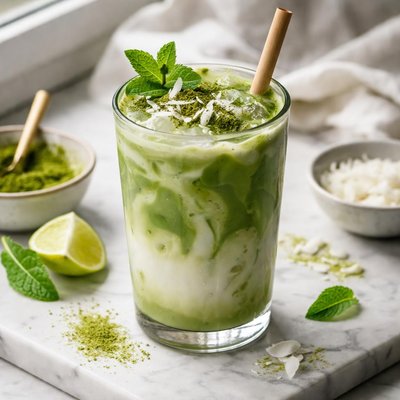
Cool, creamy, and perfectly energizing, this Keto Iced Matcha is the ultimate low-carb twist on a classic drink. Made with unsweetened almond milk, creamy heavy cream, and a hint of vanilla, this sugar-free beverage uses matcha green tea powder for an antioxidant boost and granular erythritol or monk fruit for natural, keto-friendly sweetness. In just 5 minutes, you can blend this refreshing drink to perfection, creating a frothy, ice-cold treat that's as satisfying as it is health-conscious. Ideal for busy mornings or a mid-afternoon pick-me-up, this keto iced matcha delivers both indulgence and nutrition in every sip. Perfect for staying cool while staying keto!

Smart Nutrition Tracking with SnapCalorie


Recipe Information
Ingredients
- 1 cup Unsweetened almond milk
- 0.25 cup Water
- 1 teaspoon Matcha green tea powder
- 1 teaspoon Granular erythritol or monk fruit sweetener
- 0.5 teaspoon Vanilla extract
- 2 tablespoons Heavy cream
- 1 cup Ice cubes
Instructions
Start by heating the 0.25 cup of water until it is hot but not boiling. This can be done in a microwave or on a stovetop.
In a small bowl, add the 1 teaspoon of matcha green tea powder.
Slowly pour the hot water over the matcha powder while stirring vigorously to prevent clumps and form a smooth paste.
Once the matcha is thoroughly mixed, set it aside to cool slightly.
In a blender, combine the 1 cup of unsweetened almond milk, 2 tablespoons of heavy cream, 1 teaspoon of granular erythritol (or monk fruit sweetener), and 0.5 teaspoon of vanilla extract.
Add the prepared matcha paste to the blender.
Add 1 cup of ice cubes into the blender with the rest of the ingredients.
Blend the mixture on high speed until the ice is crushed and the mixture is smooth and creamy.
Pour the keto iced matcha into a tall glass.
Serve immediately and enjoy your refreshing low-carb matcha beverage.
Nutrition Facts
Calories |
144 | ||
|---|---|---|---|
% Daily Value* |
|||
| Total Fat | 12.7 g | 16% | |
| Saturated Fat | 5.8 g | 29% | |
| Polyunsaturated Fat | 0.0 g | ||
| Cholesterol | 30 mg | 10% | |
| Sodium | 182 mg | 8% | |
| Total Carbohydrate | 6.3 g | 2% | |
| Dietary Fiber | 1.7 g | 6% | |
| Total Sugars | 0.6 g | ||
| Protein | 1.7 g | 3% | |
| Vitamin D | 2.5 mcg | 13% | |
| Calcium | 466 mg | 36% | |
| Iron | 1.2 mg | 6% | |
| Potassium | 108 mg | 2% | |
*The % Daily Value tells you how much a nutrient in a serving of food contributes to a daily diet. 2,000 calories a day is used for general nutrition advice.


