Keto Hibachi Shrimp
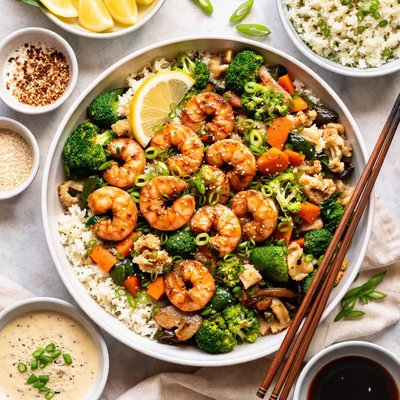
Transform your kitchen into a Japanese steakhouse with this flavorful **Keto Hibachi Shrimp** recipe! Perfectly seared shrimp is paired with tender zucchini and mushrooms in a savory, buttery garlic sauce, all brought to life with a splash of soy sauce and a hint of fresh lemon juice. This low-carb, gluten-free dish is cooked in just 15 minutes, making it an ideal quick and healthy weeknight dinner. Garnished with sesame seeds and green onions for added texture and flair, this recipe delivers the iconic hibachi-style experience right at home—without the extra carbs. Serve it fresh and sizzling, and enjoy a restaurant-quality meal that fits your keto lifestyle!

Smart Nutrition Tracking with SnapCalorie

Recipe Information
Ingredients
- 1 lb Raw shrimp, peeled and deveined
- 1 medium Zucchini, sliced
- 8 oz Mushrooms, sliced
- 2 tbsp Soy sauce (or tamari for gluten-free)
- 2 tbsp Unsalted butter
- 3 cloves Garlic, minced
- 1 tbsp Lemon juice, freshly squeezed
- 1 tbsp Olive oil
- 0.5 tsp Salt
- 0.25 tsp Black pepper
- 1 tsp Sesame seeds
- 1 Green onion, sliced
Instructions
In a large skillet or wok, heat the olive oil over medium-high heat.
Add the sliced mushrooms and zucchini to the skillet. Stir-fry for about 4-5 minutes until vegetables are tender and slightly browned.
Remove the vegetables from the skillet and set aside on a plate.
In the same skillet, add the unsalted butter. Once melted, add the minced garlic. Stir for about 30 seconds until fragrant.
Add the shrimp to the skillet. Cook for about 2-3 minutes on each side or until the shrimp are pink and opaque.
Return the cooked vegetables to the skillet with the shrimp.
Add the soy sauce (or tamari), lemon juice, salt, and black pepper to the skillet. Toss everything together to ensure even coating.
Sprinkle sesame seeds and sliced green onion on top before serving.
Serve hot, garnished with additional lemon wedges if desired.
Nutrition Facts
Calories |
229 | ||
|---|---|---|---|
% Daily Value* |
|||
| Total Fat | 10.2 g | 13% | |
| Saturated Fat | 4.2 g | 21% | |
| Polyunsaturated Fat | 0.2 g | ||
| Cholesterol | 230 mg | 77% | |
| Sodium | 877 mg | 38% | |
| Total Carbohydrate | 5.5 g | 2% | |
| Dietary Fiber | 1.2 g | 4% | |
| Total Sugars | 2.7 g | ||
| Protein | 31.0 g | 62% | |
| Vitamin D | 0.2 mcg | 1% | |
| Calcium | 95 mg | 7% | |
| Iron | 1.0 mg | 6% | |
| Potassium | 688 mg | 15% | |
*The % Daily Value tells you how much a nutrient in a serving of food contributes to a daily diet. 2,000 calories a day is used for general nutrition advice.


