Keto Classic Boba Milk Tea
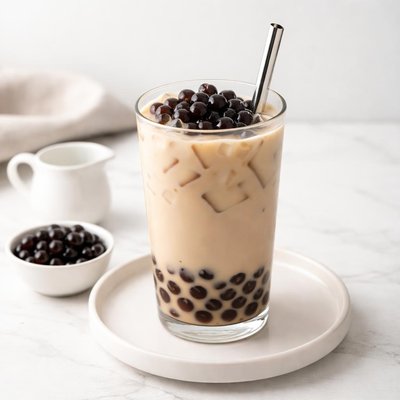
Sip your way to guilt-free indulgence with this **Keto Classic Boba Milk Tea**, a low-carb twist on the beloved bubble tea! Made with rich black tea, creamy unsweetened almond milk, and luxurious heavy cream, this keto-friendly version is sweetened naturally with powdered erythritol for a sugar-free treat that doesn’t skimp on flavor. The star of the show? Chewy, satisfying sugar-free boba pearls that perfectly complement the creamy, vanilla-kissed tea. Ready in under 30 minutes, this refreshing drink is served over ice for the ultimate beverage experience. Ideal for keto enthusiasts and bubble tea lovers alike, this recipe delivers all the boba bliss without breaking your diet. Serve it with a wide straw and savor every sip!

Smart Nutrition Tracking with SnapCalorie

Recipe Information
Ingredients
- 2 bags Black tea bags
- 1 cup Boiling water
- 1 cup Unsweetened almond milk
- 0.25 cup Heavy cream
- 2 tablespoons Powdered erythritol
- 0.5 teaspoon Vanilla extract
- 0.5 cup Sugar-free boba pearls
- 1 cup Ice cubes
Instructions
Prepare the tea by steeping two black tea bags in 1 cup of boiling water for 5-7 minutes, depending on your preferred strength. Remove the tea bags and let the tea cool to room temperature.
Cook the sugar-free boba pearls according to the package instructions. Once cooked, rinse the pearls under cold water and set aside.
In a medium bowl, mix together the unsweetened almond milk, heavy cream, powdered erythritol, and vanilla extract. Stir until the erythritol is completely dissolved.
Once the tea is cool, mix it with the almond milk and heavy cream mixture.
To assemble, place equal portions of the cooked boba pearls into two serving glasses.
Add ice cubes to each glass, filling about halfway.
Pour the prepared milk tea over the ice and boba in each glass.
Stir gently and serve immediately with a wide straw for enjoying the boba pearls.
Nutrition Facts
Calories |
201 | ||
|---|---|---|---|
% Daily Value* |
|||
| Total Fat | 11.1 g | 14% | |
| Saturated Fat | 6.0 g | 30% | |
| Polyunsaturated Fat | 0.0 g | ||
| Cholesterol | 30 mg | 10% | |
| Sodium | 101 mg | 4% | |
| Total Carbohydrate | 32.8 g | 12% | |
| Dietary Fiber | 1.9 g | 7% | |
| Total Sugars | 0.0 g | ||
| Protein | 0.5 g | 1% | |
| Vitamin D | 1.2 mcg | 6% | |
| Calcium | 231 mg | 18% | |
| Iron | 0.5 mg | 3% | |
| Potassium | 32 mg | 1% | |
*The % Daily Value tells you how much a nutrient in a serving of food contributes to a daily diet. 2,000 calories a day is used for general nutrition advice.


