Keto Chia Pudding with Fresh Fruit
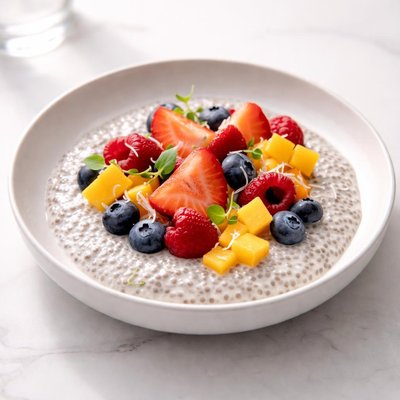
Indulge in the creamy, nutrient-packed delight of Keto Chia Pudding with Fresh Fruit, a perfect low-carb treat for breakfast, dessert, or an anytime snack. This simple recipe combines fiber-rich chia seeds with unsweetened almond milk and a touch of vanilla for a lusciously smooth, pudding-like base. Lightly sweetened with erythritol, it’s a guilt-free way to satisfy your sweet tooth. Topped with vibrant, juicy strawberries, antioxidant-rich blueberries, and a sprinkle of unsweetened coconut flakes, this keto-friendly chia pudding is as beautiful as it is delicious. Ready in just 5 minutes of prep time and customizable to your taste, it’s a fresh, no-cook solution for busy mornings or a flavorful end to any meal. Convenient, healthy, and packed with wholesome ingredients, this low-carb treat will quickly become a staple in your ketogenic lifestyle!

Smart Nutrition Tracking with SnapCalorie

Recipe Information
Ingredients
- 4 tablespoons Chia seeds
- 1 cup Unsweetened almond milk
- 1 teaspoon Vanilla extract
- 2 tablespoons Erythritol (or preferred keto sweetener)
- 0.5 cup Sliced strawberries
- 0.5 cup Blueberries
- 2 tablespoons Unsweetened coconut flakes
Instructions
In a medium bowl, combine chia seeds, almond milk, vanilla extract, and erythritol. Mix well to ensure the seeds are evenly dispersed.
Cover the bowl with plastic wrap or a lid and refrigerate for at least 2 hours, or overnight for best results, until the mixture reaches a pudding-like consistency.
Once chilled, stir the pudding to break up any clumps and ensure a smooth texture.
Divide the chia pudding evenly between two serving bowls or jars.
Top each serving with 1/4 cup of sliced strawberries and 1/4 cup of blueberries.
Sprinkle 1 tablespoon of unsweetened coconut flakes on top of each serving.
Serve immediately and enjoy a fresh, low-carb treat!
Nutrition Facts
Calories |
224 | ||
|---|---|---|---|
% Daily Value* |
|||
| Total Fat | 14.0 g | 18% | |
| Saturated Fat | 5.1 g | 25% | |
| Polyunsaturated Fat | 0.0 g | ||
| Cholesterol | 0 mg | 0% | |
| Sodium | 92 mg | 4% | |
| Total Carbohydrate | 32.9 g | 12% | |
| Dietary Fiber | 12.1 g | 43% | |
| Total Sugars | 5.8 g | ||
| Protein | 5.8 g | 12% | |
| Vitamin D | 1.3 mcg | 6% | |
| Calcium | 384 mg | 30% | |
| Iron | 2.4 mg | 13% | |
| Potassium | 216 mg | 5% | |
*The % Daily Value tells you how much a nutrient in a serving of food contributes to a daily diet. 2,000 calories a day is used for general nutrition advice.


