Keto Cabbage Kootu
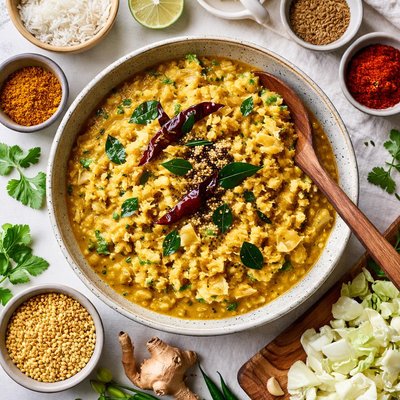
Elevate your weeknight meals with Keto Cabbage Kootu, a healthy, low-carb twist on the traditional South Indian comfort dish. Packed with nutrient-rich shredded cabbage and tender cauliflower florets, this vibrant kootu is simmered to perfection in creamy coconut milk and infused with the bold flavors of mustard seeds, cumin, and aromatic curry leaves. A sprinkle of turmeric adds earthy warmth, while grated ginger and green chilies lend a subtle kick. Ready in just 40 minutes, this keto-friendly recipe is perfect for anyone on a low-carb or gluten-free diet. Garnished with fresh cilantro, Keto Cabbage Kootu pairs beautifully with grilled proteins or can be enjoyed on its own as a hearty, satisfying dish.

Smart Nutrition Tracking with SnapCalorie

Explore More

Recipe Information
Ingredients
- 500 grams Cabbage
- 200 grams Cauliflower florets
- 2 tablespoons Coconut oil
- 1 teaspoon Mustard seeds
- 1 teaspoon Cumin seeds
- 10 leaves Curry leaves
- 0.5 teaspoon Asafoetida (hing)
- 2 whole Green chilies
- 1 teaspoon Ginger, grated
- 0.5 teaspoon Turmeric powder
- 200 milliliters Coconut milk
- 1 teaspoon Salt
- 2 tablespoons Cilantro
Instructions
Chop the cabbage into fine shreds and set aside. Break the cauliflower into small florets.
Heat the coconut oil in a large pan over medium heat. Add the mustard seeds and wait for them to crackle.
Add cumin seeds, curry leaves, and asafoetida. Stir for about 30 seconds until fragrant.
Add sliced green chilies and grated ginger. Sauté for 1 minute.
Add the shredded cabbage and cauliflower florets to the pan.
Sprinkle turmeric powder and salt over the vegetables and mix well to combine.
Cover the pan and let the vegetables cook for about 10 minutes, stirring occasionally, until they are tender.
Stir in the coconut milk, ensuring it is well mixed with the vegetables. Simmer for another 5 minutes.
Adjust the salt to taste and remove from heat.
Garnish with freshly chopped cilantro before serving.
Nutrition Facts
Calories |
130 | ||
|---|---|---|---|
% Daily Value* |
|||
| Total Fat | 7.5 g | 10% | |
| Saturated Fat | 6.1 g | 30% | |
| Polyunsaturated Fat | 0.0 g | ||
| Cholesterol | 0 mg | 0% | |
| Sodium | 534 mg | 23% | |
| Total Carbohydrate | 15.5 g | 6% | |
| Dietary Fiber | 4.9 g | 17% | |
| Total Sugars | 9.0 g | ||
| Protein | 2.9 g | 6% | |
| Vitamin D | 0.0 mcg | 0% | |
| Calcium | 79 mg | 6% | |
| Iron | 1.5 mg | 8% | |
| Potassium | 463 mg | 10% | |
*The % Daily Value tells you how much a nutrient in a serving of food contributes to a daily diet. 2,000 calories a day is used for general nutrition advice.


