Keto Butternut Squash Mash
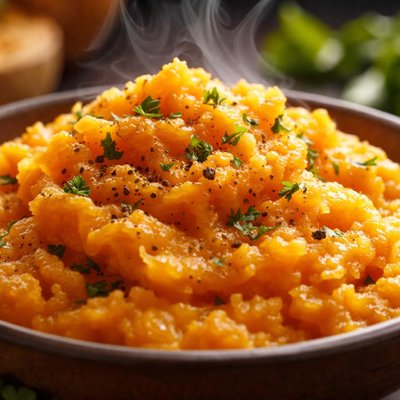
Creamy, flavorful, and low-carb, this Keto Butternut Squash Mash is a delightful twist on a classic comfort food. Perfectly roasted butternut squash is blended with butter, heavy cream, and a touch of garlic powder for a rich, velvety texture that's irresistibly smooth. Enhanced with grated Parmesan cheese and garnished with fresh parsley, this dish delivers a savory, cheesy flavor that pairs beautifully with any main course. It's quick to prepare in just 35 minutes, making it an ideal keto-friendly side dish for busy weeknights or holiday feasts. Whether you're following a ketogenic diet or simply searching for a healthier alternative to traditional mashed potatoes, this easy recipe is sure to be a crowd-pleaser!

Smart Nutrition Tracking with SnapCalorie




Recipe Information
Ingredients
- 1 medium butternut squash
- 2 tablespoons butter
- 0.25 cup heavy cream
- 0.5 teaspoon garlic powder
- 1 teaspoon salt
- 0.5 teaspoon black pepper
- 0.25 cup parmesan cheese, grated
- 1 tablespoon fresh parsley, chopped
Instructions
Preheat the oven to 400°F (200°C).
Peel the butternut squash, cut it in half, and remove the seeds. Dice the squash into small cubes for faster cooking.
Place the squash cubes onto a baking sheet lined with parchment paper and drizzle with olive oil.
Roast the squash in the oven for 20 minutes or until tender.
Once the squash is cooked, transfer it to a blender or food processor.
Add butter, heavy cream, garlic powder, salt, and black pepper to the blender.
Blend until the mixture is smooth and creamy. You may need to stop and scrape down the sides to ensure an even texture.
Transfer the mashed squash to a serving bowl and fold in the grated parmesan cheese.
Garnish with freshly chopped parsley before serving.
Serve warm as a side dish to complement your main course.
Nutrition Facts
Calories |
198 | ||
|---|---|---|---|
% Daily Value* |
|||
| Total Fat | 12.4 g | 16% | |
| Saturated Fat | 7.6 g | 38% | |
| Polyunsaturated Fat | 0.0 g | ||
| Cholesterol | 35 mg | 12% | |
| Sodium | 624 mg | 27% | |
| Total Carbohydrate | 20.2 g | 7% | |
| Dietary Fiber | 6.1 g | 22% | |
| Total Sugars | 3.7 g | ||
| Protein | 3.9 g | 8% | |
| Vitamin D | 0.1 mcg | 0% | |
| Calcium | 139 mg | 11% | |
| Iron | 1.3 mg | 7% | |
| Potassium | 550 mg | 12% | |
*The % Daily Value tells you how much a nutrient in a serving of food contributes to a daily diet. 2,000 calories a day is used for general nutrition advice.


