Italian Basic Genoise Sponge Cake
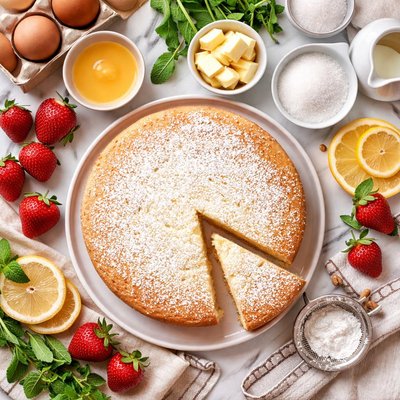
Delight in the airy perfection of the Italian Basic Genoise Sponge Cake, a timeless classic and cornerstone of European baking. This simple yet sophisticated cake relies solely on expertly whisked eggs instead of leavening agents, achieving its signature light and fluffy texture. With just four primary ingredients—eggs, sugar, flour, and a touch of melted butter—this recipe is proof that elegance lies in simplicity. The Genoise sponge boasts a neutral sweetness, making it an ideal base for a wide array of desserts, from multilayered birthday cakes to delicate trifles. Master the art of folding to retain its airy structure, and savor it as-is with a dusting of powdered sugar or transform it into a showstopping creation with your favorite fillings and frostings. Perfect for any occasion, this versatile recipe is a must-have for every baker’s repertoire! Keywords: Italian genoise sponge cake, classic sponge cake recipe, versatile cake base, light and fluffy cake.

Smart Nutrition Tracking with SnapCalorie

Explore More


Recipe Information
Ingredients
- 4 pieces Large eggs
- 120 grams Granulated sugar
- 120 grams Cake flour (or all-purpose flour, sifted)
- 30 grams Unsalted butter, melted and cooled slightly
- 1 teaspoon Vanilla extract (optional)
- 1 pinch Salt (optional, for balance)
Instructions
Preheat your oven to 175°C (350°F). Grease a 20cm (8-inch) round cake pan and line the bottom with parchment paper to ensure easy release.
In a large mixing bowl, combine the eggs and sugar. Place the bowl over a pot of simmering water, ensuring the bowl does not touch the water. Whisk the mixture constantly until it is warm to the touch and the sugar has completely dissolved. This step helps to create volume in the cake.
Remove the bowl from the heat and use a hand or stand mixer to beat the egg mixture on high speed until it triples in volume. This process can take about 8-10 minutes. The mixture should be thick, pale, and form ribbons when lifted.
Sift the flour directly over the egg mixture in three additions, gently folding it in with a spatula after each addition. Be careful not to deflate the batter; use light, folding motions.
If using, add the vanilla extract and the pinch of salt during the folding process for enhanced flavor.
Take about 1/2 cup of the batter and gently mix it into the melted butter to lighten it. Then, pour the butter mixture back into the main batter and fold it in carefully until just combined.
Pour the batter into the prepared cake pan, smoothing the top with a spatula. Tap the pan gently on the counter to release any large air bubbles.
Bake in the preheated oven for 25-30 minutes, or until the cake is golden and springs back lightly when touched. A toothpick inserted into the center should come out clean.
Remove the cake from the oven and let it cool in the pan for about 10 minutes. Then, invert it onto a wire rack, peel off the parchment paper, and allow it to cool completely before using or serving.
For serving, you can slice the cake horizontally to create layers, or enjoy it as is with a dusting of powdered sugar.
Nutrition Facts
Calories |
178 | ||
|---|---|---|---|
% Daily Value* |
|||
| Total Fat | 5.8 g | 7% | |
| Saturated Fat | 2.8 g | 14% | |
| Polyunsaturated Fat | 0.0 g | ||
| Cholesterol | 101 mg | 34% | |
| Sodium | 53 mg | 2% | |
| Total Carbohydrate | 26.8 g | 10% | |
| Dietary Fiber | 0.4 g | 1% | |
| Total Sugars | 15.4 g | ||
| Protein | 4.6 g | 9% | |
| Vitamin D | 0.5 mcg | 2% | |
| Calcium | 16 mg | 1% | |
| Iron | 1.1 mg | 6% | |
| Potassium | 52 mg | 1% | |
*The % Daily Value tells you how much a nutrient in a serving of food contributes to a daily diet. 2,000 calories a day is used for general nutrition advice.


