
Honey Mustard Marinade for Chicken or Salmon
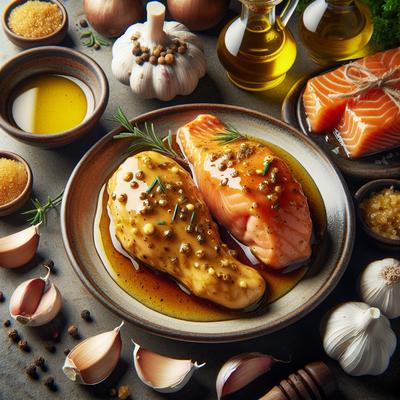
Elevate your chicken or salmon with this irresistibly flavorful Honey Mustard Marinade, a balanced blend of sweet, tangy, and savory ingredients. This quick and easy recipe combines the natural sweetness of honey with the bold tang of Dijon mustard, enhanced by a splash of zesty lemon juice, rich olive oil, and aromatic minced garlic. A sprinkle of dried thyme adds an herby undertone, while salt and black pepper round out the flavors perfectly. With just 10 minutes of prep time and the flexibility to marinate for as little as 30 minutes or up to 8 hours, this versatile marinade ensures a tender, juicy, and flavor-packed result whether you choose to grill, bake, or pan-sear. Perfect for weeknight dinners or meal prep, this honey mustard marinade is a must-try for chicken and salmon lovers alike!

Log this recipe in SnapCalorie

Recipe Information
Ingredients
- 3 tablespoons Honey
- 3 tablespoons Dijon mustard
- 2 tablespoons Olive oil
- 1 tablespoon Lemon juice
- 2 cloves Garlic
- 0.5 teaspoon Salt
- 0.25 teaspoon Black pepper
- 0.5 teaspoon Dried thyme
Instructions
In a small bowl, combine the honey and Dijon mustard, whisking until fully blended.
Gradually whisk in the olive oil to create a cohesive and smooth mixture.
Add the lemon juice to the mixture and stir well.
Finely mince the garlic cloves and add them to the bowl.
Season with salt, black pepper, and dried thyme, mixing until all ingredients are incorporated.
Place your chicken or salmon in a resealable plastic bag or a shallow dish.
Pour the marinade over the protein, ensuring it is fully coated.
Cover and refrigerate for at least 30 minutes or up to 8 hours for maximum flavor infusion.
When ready to cook, remove the protein from the marinade and discard the excess liquid.
Cook the chicken or salmon as desired, whether grilling, baking, or pan-searing.
Nutrition Facts
Calories |
548 | ||
|---|---|---|---|
% Daily Value* |
|||
| Total Fat | 37.1 g | 48% | |
| Saturated Fat | 4.4 g | 22% | |
| Polyunsaturated Fat | 2.7 g | ||
| Cholesterol | 0 mg | 0% | |
| Sodium | 2220 mg | 97% | |
| Total Carbohydrate | 55.3 g | 20% | |
| Dietary Fiber | 0.5 g | 2% | |
| Total Sugars | 52.0 g | ||
| Protein | 0.8 g | 2% | |
| Vitamin D | 0.0 mcg | 0% | |
| Calcium | 21 mg | 2% | |
| Iron | 0.9 mg | 5% | |
| Potassium | 85 mg | 2% | |
*The % Daily Value tells you how much a nutrient in a serving of food contributes to a daily diet. 2,000 calories a day is used for general nutrition advice.


