Homemade Self Rising White Flour or Whole Wheat Flour
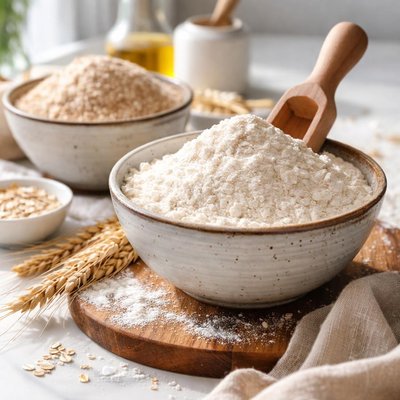
Master the art of DIY baking essentials with this quick and easy recipe for *Homemade Self Rising White Flour or Whole Wheat Flour*. In just 5 minutes, you can create your own versatile flour blend using three pantry staples: all-purpose white or whole wheat flour, baking powder, and salt. Perfect for those moments when you run out of store-bought self-rising flour or want to customize your recipes, this mixture works as a 1:1 substitution in a wide variety of baked goods. Whisk up only what you need or prepare a larger batch to store for future culinary adventures. Whether you're whipping up pancakes, biscuits, or quick breads, this recipe delivers reliable results every time. Say goodbye to last-minute grocery store trips and hello to homemade convenience!

Smart Nutrition Tracking with SnapCalorie

Explore More




Recipe Information
Ingredients
- 1 cup all-purpose white flour or whole wheat flour
- 1.5 teaspoons baking powder
- 0.25 teaspoons salt
Instructions
Start by measuring 1 cup of all-purpose white flour or whole wheat flour. Make sure to level the flour using the back of a knife for accuracy.
Add 1.5 teaspoons of baking powder to the measured flour.
Add 0.25 teaspoons (a quarter teaspoon) of salt to the mixture.
Using a whisk or fork, thoroughly combine the flour, baking powder, and salt to ensure they are evenly distributed.
If your recipe calls for more self-rising flour, simply multiply the ingredients as needed. For example, for 2 cups of self-rising flour, double each ingredient.
Store the homemade self-rising flour in an airtight container if not using immediately, and keep it in a cool, dry place.
Use this self-rising flour as a 1:1 substitution in recipes that require self-rising flour.
Nutrition Facts
Calories |
458 | ||
|---|---|---|---|
% Daily Value* |
|||
| Total Fat | 1.2 g | 2% | |
| Saturated Fat | 0.3 g | 1% | |
| Polyunsaturated Fat | 0.0 g | ||
| Cholesterol | 0 mg | 0% | |
| Sodium | 1292 mg | 56% | |
| Total Carbohydrate | 96.0 g | 35% | |
| Dietary Fiber | 3.5 g | 12% | |
| Total Sugars | 0.3 g | ||
| Protein | 12.9 g | 26% | |
| Vitamin D | 0.0 mcg | 0% | |
| Calcium | 19 mg | 1% | |
| Iron | 5.5 mg | 30% | |
| Potassium | 134 mg | 3% | |
*The % Daily Value tells you how much a nutrient in a serving of food contributes to a daily diet. 2,000 calories a day is used for general nutrition advice.


