High Protein Japanese Cheesecake
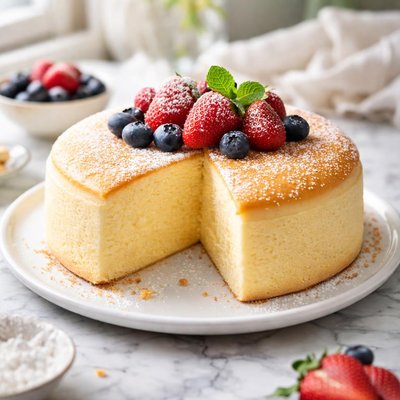
Light, fluffy, and oh-so-delicate, this High Protein Japanese Cheesecake puts a wholesome twist on a beloved classic. By incorporating protein powder into the recipe, it transforms the traditional airy dessert into a high-protein treat, perfect for satisfying both your sweet tooth and your nutritional goals. Made with silky cream cheese, whipped egg whites, and a hint of lemon for brightness, this cheesecake boasts a melt-in-your-mouth texture and a subtle sweetness. The gentle baking process in a water bath ensures a crack-free, golden top, while its high-protein content makes it a guilt-free indulgence. Ideal for dessert lovers looking for a healthier option, this fluffy wonder is best served chilled and pairs beautifully with fresh fruit or a dusting of powdered sugar. Perfect for fitness enthusiasts or anyone seeking an elegant, elevated dessert!
The Toxic-Free Cutting Board
Medical-grade titanium. No microplastics. No bacteria. No compromises.


Recipe Information
Ingredients
- 250 grams cream cheese
- 60 grams protein powder (vanilla or plain)
- 50 grams unsalted butter
- 100 milliliters whole milk
- 80 grams granulated sugar
- 6 large eggs
- 30 grams cornstarch
- 10 milliliters lemon juice
- 1 teaspoon cream of tartar
- 1 teaspoon vanilla extract
- 0.5 teaspoon salt
Instructions
Preheat the oven to 320°F (160°C). Line the bottom of a 23cm (9-inch) round springform pan with parchment paper and wrap the outside with aluminum foil to prevent water from leaking in.
Separate the egg yolks and whites, ensuring that no yolk gets into the whites, as this will affect the meringue later.
In a large heatproof bowl, melt the cream cheese, butter, and milk over a double boiler (or microwave in short bursts), stirring until you get a smooth mixture.
Remove the bowl from heat and whisk in the protein powder, cornstarch, vanilla extract, and salt until well combined.
Add the egg yolks to the cheese mixture, whisking until incorporated and smooth. Stir in the lemon juice.
In a separate clean bowl, beat the egg whites with cream of tartar using an electric mixer until soft peaks form.
Gradually add the granulated sugar to the egg whites, continuing to beat until stiff, glossy peaks form.
Fold one-third of the beaten egg whites into the cheese mixture to lighten it. Then gently fold in the remaining egg whites in two additions, being careful not to deflate the mixture.
Pour the batter into the prepared springform pan and place the pan into a larger baking dish. Fill the outer dish with hot water until it reaches halfway up the sides of the springform pan to create a water bath.
Bake in the preheated oven for 60-70 minutes, or until the top is golden brown and the cake is set but slightly jiggly in the center.
Turn off the oven and leave the oven door slightly open, allowing the cake to cool slowly for about 15-20 minutes inside the oven. This helps prevent cracking.
Remove from the oven and water bath, then let it cool completely before transferring it to the refrigerator. Chill for at least 2 hours or overnight for best results before serving.
Nutrition Facts
Calories |
303 | ||
|---|---|---|---|
% Daily Value* |
|||
| Total Fat | 20.7 g | 27% | |
| Saturated Fat | 11.3 g | 57% | |
| Polyunsaturated Fat | 0.0 g | ||
| Cholesterol | 201 mg | 67% | |
| Sodium | 312 mg | 14% | |
| Total Carbohydrate | 17.0 g | 6% | |
| Dietary Fiber | 0.2 g | 1% | |
| Total Sugars | 12.6 g | ||
| Protein | 13.0 g | 26% | |
| Vitamin D | 1.0 mcg | 5% | |
| Calcium | 99 mg | 8% | |
| Iron | 0.9 mg | 5% | |
| Potassium | 248 mg | 5% | |
*The % Daily Value tells you how much a nutrient in a serving of food contributes to a daily diet. 2,000 calories a day is used for general nutrition advice.



