High Protein Homemade Tuna Helper
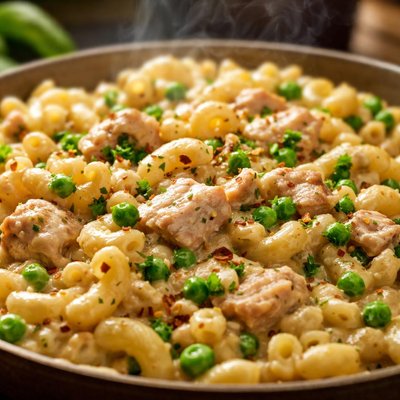
Upgrade your weeknight dinner game with this High-Protein Homemade Tuna Helper—a healthier, more delicious take on the classic comfort food! Featuring whole wheat pasta, protein-packed canned tuna, and a creamy sauce made with low-sodium chicken broth, non-fat Greek yogurt, and sharp cheddar cheese, this recipe is both nutritious and satisfying. Sautéed onions and garlic add a depth of flavor, while frozen peas bring a touch of sweetness and a pop of color. Ready in just 35 minutes, this easy one-skillet meal is as quick as it is wholesome. Perfect for busy families or meal prep, it’s a crowd-pleaser that’s high in protein, loaded with wholesome ingredients, and irresistibly comforting.

Smart Nutrition Tracking with SnapCalorie

Explore More

Recipe Information
Ingredients
- 8 ounces Whole Wheat Pasta
- 2 5-ounce cans Canned Tuna (in water)
- 1 tablespoon Olive Oil
- 1 medium, diced Onion
- 2 cloves, minced Garlic
- 1.5 cups Low-Sodium Chicken Broth
- 0.5 cup Non-Fat Greek Yogurt
- 1 cup Frozen Peas
- 1 cup Cheddar Cheese, shredded
- 0.25 cup Chopped Fresh Parsley
- 0.5 teaspoon Salt
- 0.25 teaspoon Black Pepper
Instructions
Cook the whole wheat pasta according to package instructions until al dente, then drain and set aside.
Heat olive oil in a large skillet over medium heat.
Add diced onion and sauté for 3-4 minutes until translucent. Add minced garlic and sauté for an additional 30 seconds until fragrant.
Pour in the low-sodium chicken broth and bring to a simmer.
Stir in the non-fat Greek yogurt until combined, creating a creamy sauce.
Add the drained canned tuna, peas, shredded cheddar cheese, salt, and black pepper to the skillet. Stir until the cheese is melted and the mixture is well combined.
Add the cooked pasta to the skillet, tossing to coat the pasta thoroughly with the tuna and cheese sauce.
Cook for an additional 2-3 minutes until everything is heated through.
Remove from heat and garnish with chopped fresh parsley before serving.
Nutrition Facts
Calories |
356 | ||
|---|---|---|---|
% Daily Value* |
|||
| Total Fat | 14.0 g | 18% | |
| Saturated Fat | 6.6 g | 33% | |
| Polyunsaturated Fat | 0.0 g | ||
| Cholesterol | 60 mg | 20% | |
| Sodium | 736 mg | 32% | |
| Total Carbohydrate | 27.3 g | 10% | |
| Dietary Fiber | 5.5 g | 20% | |
| Total Sugars | 5.2 g | ||
| Protein | 32.1 g | 64% | |
| Vitamin D | 1.8 mcg | 9% | |
| Calcium | 282 mg | 22% | |
| Iron | 2.6 mg | 14% | |
| Potassium | 481 mg | 10% | |
*The % Daily Value tells you how much a nutrient in a serving of food contributes to a daily diet. 2,000 calories a day is used for general nutrition advice.


