Half Hour Apple Butter
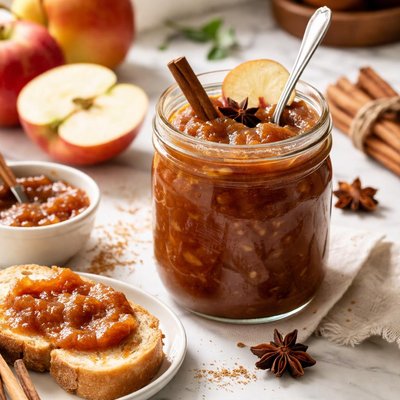
Dive into the cozy, spiced flavors of fall with this quick and easy Half Hour Apple Butter recipe, perfect for busy home cooks craving homemade goodness. With just six cups of diced apples, a splash of apple cider, and a blend of warm spices like cinnamon, nutmeg, and cloves, this no-fuss recipe achieves a velvety-smooth, richly aromatic spread in just 30 minutes. A touch of lemon juice and vanilla extract enhances the natural sweetness, while brown sugar lends depth and caramel-like notes. Ideal as a topping for toast, biscuits, or pancakes, or even as a filling for pastries, this small-batch apple butter is a must-have for any pantry. Ready in under half an hour, it’s the ultimate shortcut to capturing the essence of autumn.

Smart Nutrition Tracking with SnapCalorie

Recipe Information
Ingredients
- 6 cups apples (peeled, cored, and diced)
- 1 cup apple cider
- 1 cup brown sugar (packed)
- 0.5 cup granulated sugar
- 2 teaspoons ground cinnamon
- 0.25 teaspoons ground nutmeg
- 0.25 teaspoons ground cloves
- 1 tablespoon lemon juice
- 1 teaspoon vanilla extract
- 0.25 teaspoons salt
Instructions
Place the diced apples and the apple cider in a large saucepan over medium heat.
Cover the pot with a lid and cook for 10–12 minutes, stirring occasionally, until the apples soften and begin to break down.
Using an immersion blender (or transferring the mixture to a countertop blender), puree the cooked apples until smooth.
Return the pureed apples to the saucepan and add in the brown sugar, granulated sugar, cinnamon, nutmeg, cloves, lemon juice, vanilla extract, and salt.
Cook over medium-low heat, stirring frequently to prevent sticking, for about 8–10 minutes, or until the apple butter thickens to your desired consistency.
Remove the apple butter from the heat and let it cool to room temperature.
Transfer to clean, airtight jars or containers and refrigerate. The apple butter will stay fresh for up to 2 weeks.
Nutrition Facts
Calories |
86 | ||
|---|---|---|---|
% Daily Value* |
|||
| Total Fat | 0.2 g | 0% | |
| Saturated Fat | 0.0 g | 0% | |
| Polyunsaturated Fat | 0.0 g | ||
| Cholesterol | 0 mg | 0% | |
| Sodium | 24 mg | 1% | |
| Total Carbohydrate | 22.3 g | 8% | |
| Dietary Fiber | 1.4 g | 5% | |
| Total Sugars | 19.8 g | ||
| Protein | 0.2 g | 0% | |
| Vitamin D | 0.0 mcg | 0% | |
| Calcium | 14 mg | 1% | |
| Iron | 0.2 mg | 1% | |
| Potassium | 79 mg | 2% | |
*The % Daily Value tells you how much a nutrient in a serving of food contributes to a daily diet. 2,000 calories a day is used for general nutrition advice.


