Greek Village Salad
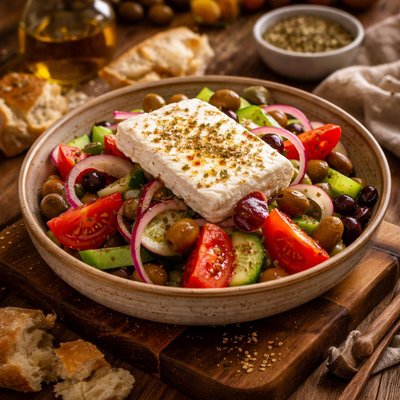
Bright, colorful, and irresistibly fresh, this traditional Greek Village Salad (Horiatiki) brings the flavors of the Mediterranean straight to your table in just 15 minutes. Bursting with vine-ripened tomatoes, crisp cucumbers, tangy red onion, and briny Kalamata olives, this no-cook salad is crowned with creamy feta cheese and a drizzle of herbaceous olive oil and lemon dressing. Perfectly seasoned with a touch of dried oregano and black pepper, this rustic dish is as delicious as it is effortless. Whether served as a light side dish or paired with crusty bread for a simple main, this classic Greek salad is your go-to recipe for a healthy, vibrant meal that's rich in authentic Mediterranean flavors.

Smart Nutrition Tracking with SnapCalorie

Recipe Information
Ingredients
- 4 medium Tomatoes
- 1 large Cucumbers
- 1 medium Red onion
- 1 medium Green bell pepper
- 1 cup Kalamata olives
- 200 grams Feta cheese
- 3 tablespoons Extra virgin olive oil
- 1 tablespoon Lemon juice
- 1 teaspoon Dried oregano
- 0.5 teaspoon Salt
- 0.5 teaspoon Ground black pepper
Instructions
Wash and dry all the vegetables thoroughly.
Chop the tomatoes into bite-sized wedges and place them in a large salad bowl.
Peel the cucumber (optional) and slice it into thick rounds or half-moons. Add to the bowl.
Slice the red onion thinly and add it to the salad.
Deseed the green bell pepper, slice it into thin strips, and toss them into the bowl.
Add the Kalamata olives directly into the salad.
Cut the feta cheese into thick slices or large cubes and place them on top of the vegetables.
In a small bowl, mix together the olive oil, lemon juice, dried oregano, salt, and black pepper to create the dressing.
Drizzle the dressing evenly over the salad.
Gently toss everything together or leave it as is for a more rustic presentation.
Serve immediately with crusty bread or as a side dish to your favorite Mediterranean meal.
Nutrition Facts
Calories |
404 | ||
|---|---|---|---|
% Daily Value* |
|||
| Total Fat | 33.5 g | 43% | |
| Saturated Fat | 11.0 g | 55% | |
| Polyunsaturated Fat | 0.0 g | ||
| Cholesterol | 44 mg | 15% | |
| Sodium | 1691 mg | 74% | |
| Total Carbohydrate | 19.2 g | 7% | |
| Dietary Fiber | 6.1 g | 22% | |
| Total Sugars | 7.8 g | ||
| Protein | 10.2 g | 20% | |
| Vitamin D | 0.5 mcg | 3% | |
| Calcium | 344 mg | 26% | |
| Iron | 2.4 mg | 14% | |
| Potassium | 641 mg | 14% | |
*The % Daily Value tells you how much a nutrient in a serving of food contributes to a daily diet. 2,000 calories a day is used for general nutrition advice.


