Greek Olive and Asparagus Saute
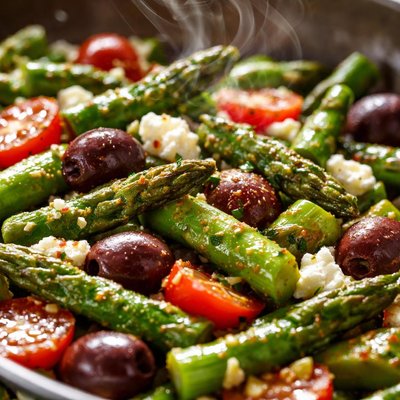
Elevate your dinner table with the vibrant flavors of this Greek Olive and Asparagus Sauté—a quick and healthy side dish that’s bursting with Mediterranean flair. Crisp-tender asparagus is sautéed in fragrant garlic-infused olive oil, then tossed with the briny richness of sliced Greek olives, zesty lemon, and a hint of fresh parsley for a garnish that pops. Ready in just 20 minutes, this one-pan recipe is perfect for busy weeknights or as a light addition to heavier meals. Serve it warm as a standalone side, or pair it with quinoa or rice for a wholesome vegetarian option. Packed with nutrients and bold flavors, this Greek-inspired sauté is a feast for both your palate and your eyes!

Smart Nutrition Tracking with SnapCalorie


Recipe Information
Ingredients
- 1 pound asparagus
- 2 tablespoons extra virgin olive oil
- 3 units garlic cloves
- 0.5 cup Greek olives (Kalamata or green, pitted and sliced)
- 1 teaspoon lemon zest
- 1 tablespoon lemon juice
- 0.5 teaspoon salt
- 0.25 teaspoon black pepper (freshly ground)
- 2 tablespoons fresh parsley (chopped, optional for garnish)
Instructions
Wash and trim the asparagus, cutting off the tough woody ends. Chop the asparagus spears into 2-inch pieces.
Peel and mince the garlic cloves.
In a large skillet, heat the olive oil over medium heat.
Add the minced garlic to the skillet and sauté for 1 minute until fragrant, being careful not to let it burn.
Add the chopped asparagus to the skillet. Stir to coat the asparagus in the garlic-infused oil. Sauté for 5-7 minutes, stirring occasionally, until the asparagus is tender-crisp and bright green.
Stir in the sliced Greek olives, lemon zest, lemon juice, salt, and black pepper. Cook for an additional 2 minutes to marry the flavors.
Taste and adjust seasoning if needed. If desired, sprinkle with fresh parsley for a vibrant garnish.
Serve warm as a side dish, or enjoy over quinoa or rice for a light vegetarian meal.
Nutrition Facts
Calories |
111 | ||
|---|---|---|---|
% Daily Value* |
|||
| Total Fat | 9.2 g | 12% | |
| Saturated Fat | 1.3 g | 7% | |
| Polyunsaturated Fat | 0.0 g | ||
| Cholesterol | 0 mg | 0% | |
| Sodium | 452 mg | 20% | |
| Total Carbohydrate | 7.2 g | 3% | |
| Dietary Fiber | 3.2 g | 11% | |
| Total Sugars | 2.3 g | ||
| Protein | 2.9 g | 6% | |
| Vitamin D | 0.0 mcg | 0% | |
| Calcium | 44 mg | 3% | |
| Iron | 2.9 mg | 16% | |
| Potassium | 288 mg | 6% | |
*The % Daily Value tells you how much a nutrient in a serving of food contributes to a daily diet. 2,000 calories a day is used for general nutrition advice.


