German Kasekuchen
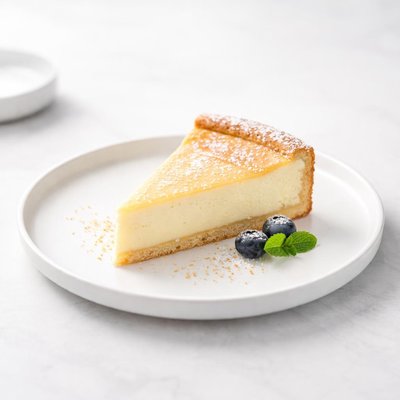
Indulge in the rich, creamy perfection of German Kasekuchen, a traditional German cheesecake that's as light as it is irresistible. This authentic recipe features a crisp, buttery crust made from scratch and filled with a luscious blend of quark, heavy cream, and a hint of lemon zest for a refreshing twist. Unlike its American counterpart, Kasekuchen boasts a delicately airy texture, thanks to its whipped eggs and tangy quark base. Baked to golden perfection and subtly sweetened, this cheesecake is finished with a dusting of powdered sugar, making it the ultimate crowd-pleaser. Perfect as a centerpiece for special occasions or a comforting dessert for any day, this German classic is sure to become a new favorite. Keywords: German Kasekuchen, traditional German cheesecake, quark cheesecake recipe, authentic cheesecake, homemade dessert.

Smart Nutrition Tracking with SnapCalorie


Recipe Information
Ingredients
- 250 grams All-purpose flour
- 75 grams Sugar (for crust)
- 125 grams Unsalted butter (cold, cubed)
- 1 large Egg yolk
- 1 teaspoon Vanilla extract (for crust)
- 500 grams Quark
- 200 grams Sugar (for filling)
- 4 large Eggs
- 200 milliliters Heavy cream
- 50 grams Cornstarch
- 1 teaspoon Vanilla extract (for filling)
- 1 whole Zest of one lemon
- 1 tablespoon Powdered sugar (optional, for dusting)
Instructions
Preheat your oven to 175°C (350°F). Grease a 9-inch (23cm) springform pan, and line the bottom with parchment paper.
To make the crust, mix the all-purpose flour, sugar, and cold butter cubes in a large mixing bowl. Rub the butter into the flour mixture with your fingers until it resembles a crumbly texture.
Add the egg yolk and vanilla extract to the crumble mixture and knead gently until it forms a dough. Wrap the dough in plastic wrap and refrigerate for 15 minutes.
Roll out the chilled dough on a lightly floured surface to about 1/4-inch (6mm) thickness. Press it into the bottom and slightly up the sides of the springform pan.
Prick the crust with a fork to prevent bubbling, then blind bake it in the preheated oven for 10 minutes. Remove and allow it to cool while preparing the filling.
For the filling, beat the quark and sugar in a large mixing bowl until smooth. Add the eggs one at a time, mixing well after each addition.
Mix in the heavy cream, cornstarch, vanilla extract, and lemon zest. Blend until all ingredients are combined and the mixture is smooth.
Pour the filling over the pre-baked crust, spreading it evenly with a spatula.
Bake the cheesecake in the preheated oven for 50-60 minutes or until the top is firm and slightly golden. The center may still jiggle slightly; it will set as it cools.
Turn off the oven and leave the cheesecake inside for 10 minutes with the door slightly ajar to prevent cracking.
Remove the cheesecake from the oven and let it cool completely in the pan on a wire rack. Once cooled, refrigerate for at least 4 hours or overnight for best results.
Before serving, optionally dust the top with powdered sugar. Slice and enjoy your homemade German Kasekuchen!
Nutrition Facts
Calories |
454 | ||
|---|---|---|---|
% Daily Value* |
|||
| Total Fat | 19.5 g | 25% | |
| Saturated Fat | 11.3 g | 57% | |
| Polyunsaturated Fat | 0.0 g | ||
| Cholesterol | 145 mg | 48% | |
| Sodium | 58 mg | 3% | |
| Total Carbohydrate | 55.1 g | 20% | |
| Dietary Fiber | 0.8 g | 3% | |
| Total Sugars | 30.5 g | ||
| Protein | 12.1 g | 24% | |
| Vitamin D | 0.5 mcg | 2% | |
| Calcium | 66 mg | 5% | |
| Iron | 1.5 mg | 8% | |
| Potassium | 128 mg | 3% | |
*The % Daily Value tells you how much a nutrient in a serving of food contributes to a daily diet. 2,000 calories a day is used for general nutrition advice.


