German Easter Eggs Ostereier

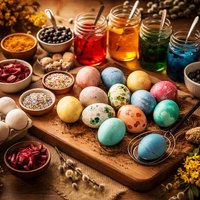
Transform your Easter celebration with the vibrant artistry of homemade *German Easter Eggs (Ostereier)*, a cherished tradition filled with natural beauty and creativity. This recipe brings a unique twist to Easter egg decorating, using all-natural dyes crafted from everyday ingredients like turmeric for sunny yellows, red onion skins for deep purples, and red cabbage for stunning blues. With just 30 minutes of preparation, you’ll learn the art of creating vivid, eco-friendly hues while avoiding artificial coloring. These naturally dyed Easter eggs are not only visually stunning but also a heartfelt nod to traditional German customs. Perfect for festive displays or as a meaningful activity with loved ones, this recipe offers a visually captivating and environmentally conscious way to celebrate the season.

Smart Nutrition Tracking with SnapCalorie

Recipe Information
Ingredients
- 12 pieces White eggs
- 4 cups Water
- 6 tablespoons White vinegar
- 3 tablespoons Turmeric powder (for yellow dye)
- 2 cups Red onion skins (for red or purple dye)
- 2 cups Chopped red cabbage (for blue dye)
- 2 pieces Beets, sliced (for pink dye)
- 2 cups Spinach leaves (for green dye)
Instructions
Place the white eggs in a large pot and fill with enough water to cover them by one inch. Bring to a boil over medium-high heat, reduce the heat to low, and simmer for 10 minutes.
Remove the eggs with a slotted spoon and allow them to cool to room temperature. Set the eggs aside.
Prepare the natural dyes: In separate small pots, combine 1 cup of water with each respective ingredient for coloring (turmeric powder, red onion skins, chopped red cabbage, sliced beets, or spinach leaves). For each dye, add 1 tablespoon of white vinegar.
Bring each pot to a boil, then reduce the heat and simmer for 15-20 minutes. Strain the liquid into separate bowls or jars, discarding the solids. Let the dye cool to room temperature.
Submerge the cooled boiled eggs in the natural dyes, ensuring they are fully covered. For vibrant colors, let the eggs soak for at least 30 minutes. For deeper colors, leave them in the dye for up to 3 hours or overnight in the refrigerator.
Carefully remove the eggs from the dye and place them on a rack or paper towel to air-dry completely.
Optional: Rub a small amount of cooking oil on the dried eggs to give them a glossy finish.
Display the German Easter Eggs (Ostereier) as part of your Easter tradition, or store them in the refrigerator until you're ready to use them.
Nutrition Facts
Calories |
103 | ||
|---|---|---|---|
% Daily Value* |
|||
| Total Fat | 5.0 g | 6% | |
| Saturated Fat | 1.7 g | 8% | |
| Polyunsaturated Fat | 0.0 g | ||
| Cholesterol | 186 mg | 62% | |
| Sodium | 99 mg | 4% | |
| Total Carbohydrate | 8.6 g | 3% | |
| Dietary Fiber | 2.6 g | 9% | |
| Total Sugars | 3.1 g | ||
| Protein | 6.9 g | 14% | |
| Vitamin D | 1.0 mcg | 5% | |
| Calcium | 71 mg | 5% | |
| Iron | 2.9 mg | 16% | |
| Potassium | 321 mg | 7% | |
*The % Daily Value tells you how much a nutrient in a serving of food contributes to a daily diet. 2,000 calories a day is used for general nutrition advice.


