Ethiopian Flat Bread Injera
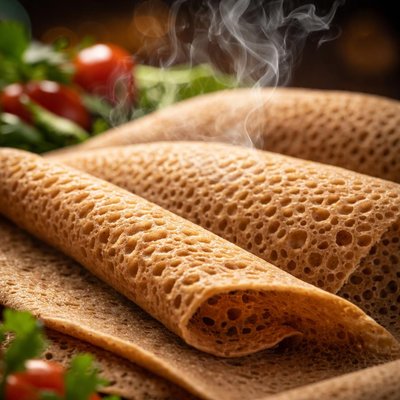
Discover the soul of Ethiopian cuisine with this authentic Injera recipe, the spongy flatbread that doubles as both a plate and utensil in traditional Ethiopian dining. Made with nutrient-rich teff flour and a touch of all-purpose flour, this naturally fermented bread boasts a unique tangy flavor and a delightfully soft, bubbly texture. Perfectly paired with bold and aromatic dishes like Doro Wat or lentil stew, Injera is as much an experience as it is a bread. While it requires a patient fermentation process of 2-3 days, the result is well worth the wait—a flavorful, versatile flatbread that brings a piece of Ethiopia to your table. Whether you're hosting an Ethiopian feast or exploring new culinary traditions, this Injera recipe is sure to delight.

Smart Nutrition Tracking with SnapCalorie



Recipe Information
Ingredients
- 2 cups Teff flour
- 1 cup All-purpose flour
- 3.5 cups Water
- 0.25 teaspoons Dry yeast
- 0.5 teaspoons Salt
Instructions
In a large mixing bowl, combine the teff flour and all-purpose flour.
Dissolve the dry yeast in 1/4 cup of lukewarm water. Let it sit for 5-10 minutes until foamy.
Add the yeast mixture to the flour mixture. Gradually add the remaining water (3 1/4 cups) while stirring until a smooth, thin batter forms. The consistency should be slightly thicker than pancake batter.
Cover the batter loosely with a clean kitchen towel or plastic wrap and leave it at room temperature to ferment for 2-3 days. Stir the batter once each day to encourage fermentation. The batter will develop a slight tangy aroma and bubbles will form on the surface.
After fermentation, gently stir the batter and add the salt. Adjust the consistency with a little water if it has thickened too much during fermentation.
Heat a non-stick skillet or injera pan over medium heat. Lightly grease it with a small amount of oil, then wipe off excess oil with a paper towel.
Pour about 1/2 cup of the batter onto the pan, swirling it quickly in a circular motion to spread the batter evenly. The injera should be thin but not see-through.
Cook for 1-2 minutes without flipping. You’ll see bubbles forming on the surface, and the edges will begin to lift slightly when done. The top should look dry, and the bottom should have a light golden color.
Remove the injera and repeat the cooking process with the remaining batter, stacking cooked injera on a plate and covering with a clean kitchen towel to keep them soft.
Serve warm or at room temperature with your favorite Ethiopian dishes such as Doro Wat or lentil stew.
Nutrition Facts
Calories |
334 | ||
|---|---|---|---|
% Daily Value* |
|||
| Total Fat | 1.8 g | 2% | |
| Saturated Fat | 0.3 g | 2% | |
| Polyunsaturated Fat | 0.0 g | ||
| Cholesterol | 0 mg | 0% | |
| Sodium | 259 mg | 11% | |
| Total Carbohydrate | 67.7 g | 25% | |
| Dietary Fiber | 5.7 g | 20% | |
| Total Sugars | 1.2 g | ||
| Protein | 10.5 g | 21% | |
| Vitamin D | 0.0 mcg | 0% | |
| Calcium | 133 mg | 10% | |
| Iron | 5.7 mg | 32% | |
| Potassium | 286 mg | 6% | |
*The % Daily Value tells you how much a nutrient in a serving of food contributes to a daily diet. 2,000 calories a day is used for general nutrition advice.


