Escarole Salad with Champagne Vinaigrette
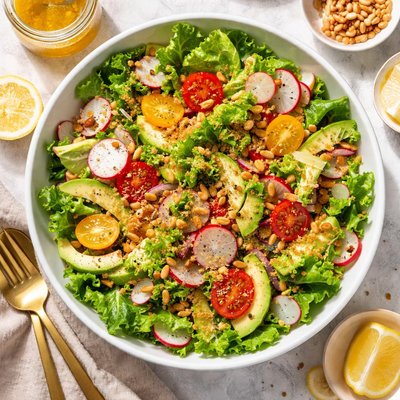
Elevate your salad game with this vibrant and refreshing Escarole Salad with Champagne Vinaigrette, a perfect balance of crisp greens and irresistible toppings. Bitter-sweet escarole forms the base, expertly paired with a zesty champagne vinaigrette crafted from extra-virgin olive oil, champagne vinegar, honey, and Dijon mustard. A sprinkle of toasted almonds, tangy dried cranberries, and luxurious shavings of Parmesan cheese add layers of texture and depth, creating a harmonious blend of sweet, salty, and nutty notes. Ready in just 15 minutes, this no-cook recipe is ideal as a sophisticated side dish or a light lunch. Bursting with flavor and crunch, it’s a must-try for any salad enthusiast looking to impress with minimal effort!

Smart Nutrition Tracking with SnapCalorie

Recipe Information
Ingredients
- 1 head Escarole
- 0.25 cup Extra-virgin olive oil
- 3 tablespoons Champagne vinegar
- 1 teaspoon Honey
- 1 teaspoon Dijon mustard
- 0.5 teaspoon Kosher salt
- 0.25 teaspoon Freshly ground black pepper
- 0.25 cup Toasted almonds
- 2 ounces Parmesan cheese, shaved
- 0.25 cup Dried cranberries
Instructions
Wash the escarole thoroughly under cold running water to remove any dirt or grit. Pat dry with a clean kitchen towel or use a salad spinner to dry.
Cut the escarole into bite-sized pieces, discarding the core. Place the chopped escarole in a large salad bowl.
In a small bowl, whisk together the extra-virgin olive oil, Champagne vinegar, honey, Dijon mustard, kosher salt, and freshly ground black pepper until the vinaigrette is emulsified and smooth.
Drizzle the Champagne vinaigrette over the escarole and toss gently to coat the leaves evenly.
Sprinkle the toasted almonds, shaved Parmesan cheese, and dried cranberries over the salad for added texture and flavor.
Serve immediately as a light and flavorful starter or side dish.
Nutrition Facts
Calories |
295 | ||
|---|---|---|---|
% Daily Value* |
|||
| Total Fat | 24.5 g | 31% | |
| Saturated Fat | 5.2 g | 26% | |
| Polyunsaturated Fat | 0.7 g | ||
| Cholesterol | 14 mg | 5% | |
| Sodium | 407 mg | 18% | |
| Total Carbohydrate | 12.6 g | 5% | |
| Dietary Fiber | 3.5 g | 12% | |
| Total Sugars | 7.8 g | ||
| Protein | 7.5 g | 15% | |
| Vitamin D | 0.1 mcg | 1% | |
| Calcium | 221 mg | 17% | |
| Iron | 1.1 mg | 6% | |
| Potassium | 248 mg | 5% | |
*The % Daily Value tells you how much a nutrient in a serving of food contributes to a daily diet. 2,000 calories a day is used for general nutrition advice.


