English Mustard

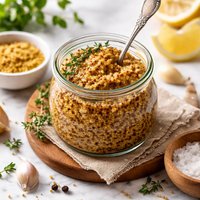
Boldly zesty and wonderfully versatile, this homemade English Mustard recipe is the ultimate way to add a sharp, tangy kick to your favorite dishes. Made from a blend of freshly ground yellow mustard seeds, dry mustard powder, and a touch of turmeric, this DIY condiment combines fiery heat with subtle earthiness. The addition of white wine vinegar lends a signature tang while acting as a natural preservative, ensuring your mustard stays fresh and flavorful. With just 10 minutes of prep time and a short 24-hour rest to develop its robust flavors, this simple yet vibrant recipe is perfect for lovers of classic English condiments. Use it to elevate roast meats, sandwiches, sausages, and more, or add it as a secret ingredient to marinades and dressings. Craft a jar of this homemade English Mustard and savor its bold taste for up to two months!

Smart Nutrition Tracking with SnapCalorie




Recipe Information
Ingredients
- 50 grams Yellow mustard seeds
- 25 grams Dry mustard powder
- 60 ml Cold water
- 30 ml White wine vinegar
- 1 teaspoon Salt
- 0.5 teaspoon Sugar
- 0.5 teaspoon Ground turmeric
Instructions
1. Grind the yellow mustard seeds into a coarse powder using a spice grinder or mortar and pestle.
2. In a mixing bowl, combine the ground mustard seeds, dry mustard powder, salt, sugar, and turmeric.
3. Gradually add the cold water to the dry mixture while whisking continuously to form a smooth paste.
4. Stir in the white wine vinegar and mix until fully incorporated. The vinegar will help preserve the mustard and add tanginess.
5. Transfer the mustard to an airtight container or jar and let it sit at room temperature for 24 hours before using. This allows the flavors to meld and the mustard to thicken.
6. Store the mustard in the refrigerator for up to 2 months and enjoy as needed!
Nutrition Facts
Calories |
45 | ||
|---|---|---|---|
% Daily Value* |
|||
| Total Fat | 2.9 g | 4% | |
| Saturated Fat | 0.2 g | 1% | |
| Polyunsaturated Fat | 0.0 g | ||
| Cholesterol | 0 mg | 0% | |
| Sodium | 244 mg | 11% | |
| Total Carbohydrate | 3.1 g | 1% | |
| Dietary Fiber | 1.4 g | 5% | |
| Total Sugars | 0.7 g | ||
| Protein | 2.1 g | 4% | |
| Vitamin D | 0.0 mcg | 0% | |
| Calcium | 33 mg | 3% | |
| Iron | 0.8 mg | 4% | |
| Potassium | 57 mg | 1% | |
*The % Daily Value tells you how much a nutrient in a serving of food contributes to a daily diet. 2,000 calories a day is used for general nutrition advice.


