Eba
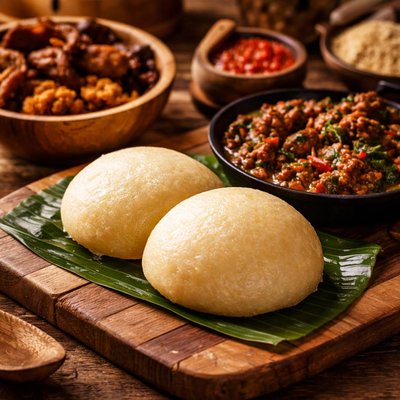
Elevate your dining experience with Eba, a classic Nigerian staple that embodies simplicity and versatility. Made from garri (cassava flour) and water, this traditional dish comes together in just 10 minutes, making it perfect for a quick yet satisfying meal. The art of preparing Eba lies in its smooth, lump-free texture achieved through vigorous stirring with hot, boiling water—a skill passed down through generations. As a neutral base, Eba pairs beautifully with rich Nigerian soups like Egusi, Okra, or Ogbono, absorbing their vibrant flavors for a truly comforting bite. Whether shaped into rounds or customized molds, Eba is a must-try centerpiece for any African-inspired meal. Perfectly easy to make, gluten-free, and a cultural classic, this recipe will add authenticity and heart to your dining table.

Smart Nutrition Tracking with SnapCalorie

Explore More
Recipe Information
Ingredients
- 200 grams Garri (cassava flour)
- 500 milliliters Water
Instructions
Bring 500 milliliters of water to a boil in a large pot or kettle.
While the water is heating, measure out 200 grams of garri into a wide, heatproof mixing bowl.
Once the water has reached a rolling boil, carefully pour it over the garri in the bowl.
Using a wooden spatula or spoon, stir the mixture vigorously in one direction until it begins to thicken and come together.
Continue to mix until the water is fully absorbed and the eba has a smooth, lump-free consistency. You may adjust the consistency with more hot water if needed or by adding a bit more garri.
Once the desired texture is achieved, mold the eba into desired shapes using your hands or a mold.
Serve immediately with your choice of soup or stew, such as Egusi, Okra, or Ogbono soup.
Nutrition Facts
Calories |
180 | ||
|---|---|---|---|
% Daily Value* |
|||
| Total Fat | 0.2 g | 0% | |
| Saturated Fat | 0.0 g | 0% | |
| Polyunsaturated Fat | 0.0 g | ||
| Cholesterol | 0 mg | 0% | |
| Sodium | 20 mg | 1% | |
| Total Carbohydrate | 42.4 g | 15% | |
| Dietary Fiber | 1.1 g | 4% | |
| Total Sugars | 0.0 g | ||
| Protein | 0.7 g | 1% | |
| Vitamin D | 0.0 mcg | 0% | |
| Calcium | 33 mg | 3% | |
| Iron | 0.4 mg | 2% | |
| Potassium | 150 mg | 3% | |
*The % Daily Value tells you how much a nutrient in a serving of food contributes to a daily diet. 2,000 calories a day is used for general nutrition advice.


