Easy Tuna Ball
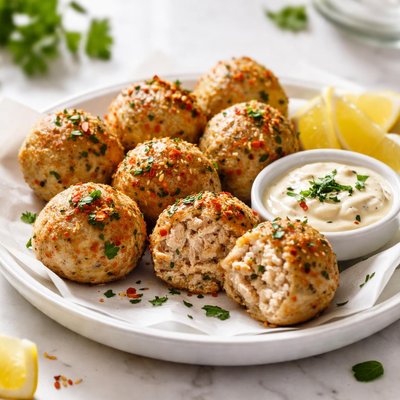
Elevate your appetizer game with this Easy Tuna Ball recipe, a creamy and flavorful twist on the classic party snack. Made with tender canned tuna, tangy Dijon mustard, zesty lemon juice, and a blend of savory seasonings, this no-cook dish comes together in just 15 minutes. The rich base of softened cream cheese ensures a luscious texture, while a finishing coat of crunchy chopped walnuts (optional but highly recommended) adds a delightful contrast. Perfectly chilled and paired with crackers or crisp vegetable sticks, this crowd-pleasing tuna ball is ideal for holiday gatherings, potlucks, or any occasion. With its quick prep time, versatile serving options, and bold, satisfying taste, this appetizer is guaranteed to be the star of your snack spread!

Smart Nutrition Tracking with SnapCalorie

Explore More



Recipe Information
Ingredients
- 2 cans (5 oz each) canned tuna
- 8 oz cream cheese
- 1 tbsp Dijon mustard
- 1 tbsp lemon juice
- 0.5 tsp garlic powder
- 0.5 tsp onion powder
- 0.25 tsp black pepper
- 1 tbsp (chopped) parsley
- 0.5 cup (chopped, optional for coating) walnuts
- 1 package (for serving) crackers or vegetable sticks
Instructions
Drain the canned tuna completely and transfer it into a large mixing bowl.
Add the softened cream cheese, Dijon mustard, lemon juice, garlic powder, onion powder, black pepper, and chopped parsley to the bowl with the tuna.
Using a fork or spatula, mix everything together until well-combined and smooth.
Shape the mixture into a ball using your hands. If the mixture feels too sticky, refrigerate for 10 minutes before shaping.
Optional: Place the chopped walnuts on a flat surface and gently roll the tuna ball in the walnuts to coat it evenly.
Transfer the tuna ball to a serving plate, cover with plastic wrap, and refrigerate for at least 1 hour to firm up and allow the flavors to meld.
Serve chilled with crackers or vegetable sticks. Enjoy!
Nutrition Facts
Calories |
273 | ||
|---|---|---|---|
% Daily Value* |
|||
| Total Fat | 20.6 g | 26% | |
| Saturated Fat | 8.5 g | 42% | |
| Polyunsaturated Fat | 0.0 g | ||
| Cholesterol | 61 mg | 20% | |
| Sodium | 352 mg | 15% | |
| Total Carbohydrate | 6.7 g | 2% | |
| Dietary Fiber | 0.8 g | 3% | |
| Total Sugars | 2.0 g | ||
| Protein | 16.4 g | 33% | |
| Vitamin D | 2.1 mcg | 11% | |
| Calcium | 56 mg | 4% | |
| Iron | 1.0 mg | 6% | |
| Potassium | 212 mg | 5% | |
*The % Daily Value tells you how much a nutrient in a serving of food contributes to a daily diet. 2,000 calories a day is used for general nutrition advice.


