
Easiest Moroccan Harissa or Hot Sauce
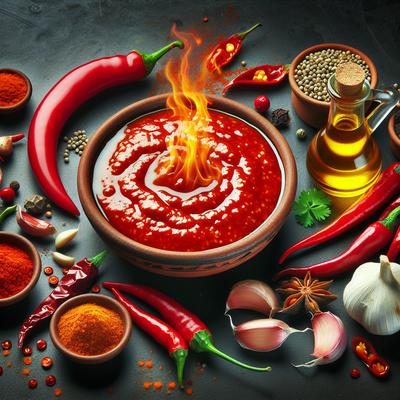
Spice up your kitchen with the *Easiest Moroccan Harissa or Hot Sauce*, a quick and flavorful take on the iconic North African condiment. This bold and versatile recipe marries the smoky heat of dried red chilies with aromatic garlic, ground cumin, coriander, and smoked paprika, all balanced with a splash of lemon juice and a touch of olive oil. Ready in just 15 minutes, this homemade harissa stands out for its simplicity and customizable heat level—perfect for everything from a smoky marinade for meat to a fiery topping for sandwiches and roasted vegetables. With its vibrant, spicy kick and ease of preparation, this harissa is your go-to for adding Moroccan flair to any dish.

Log this recipe in SnapCalorie

Recipe Information
Ingredients
- 12 pieces dried red chilies (mild or hot, depending on preference)
- 4 pieces garlic cloves
- 1 teaspoon ground cumin
- 1 teaspoon ground coriander
- 1 teaspoon smoked paprika
- 1 teaspoon salt
- 4 tablespoons olive oil
- 2 tablespoons lemon juice
- 1 cup warm water
Instructions
Begin by soaking the dried red chilies in a bowl of warm water for 15 minutes, or until they become soft and pliable.
Drain the chilies and remove their stems and seeds for a milder flavor (optional).
In a blender or food processor, combine the softened chilies, garlic cloves, ground cumin, ground coriander, smoked paprika, and salt.
Add 2 tablespoons of olive oil and the lemon juice to the blender or food processor.
Blend the mixture until smooth, adding small amounts of warm water as necessary to achieve a paste-like consistency.
Taste the harissa and adjust the seasoning, adding more salt or spices if needed.
Transfer the harissa to a clean jar and pour the remaining 2 tablespoons of olive oil on top to help preserve it.
Store in the refrigerator for up to 2 weeks. Use as a spicy condiment, marinade, or flavoring agent for various dishes.
Nutrition Facts
Calories |
624 | ||
|---|---|---|---|
% Daily Value* |
|||
| Total Fat | 58.4 g | 75% | |
| Saturated Fat | 9.1 g | 45% | |
| Polyunsaturated Fat | 5.3 g | ||
| Cholesterol | 0 mg | 0% | |
| Sodium | 2386 mg | 104% | |
| Total Carbohydrate | 22.7 g | 8% | |
| Dietary Fiber | 7.4 g | 26% | |
| Total Sugars | 8.8 g | ||
| Protein | 4.5 g | 9% | |
| Vitamin D | 0.0 mcg | 0% | |
| Calcium | 82 mg | 6% | |
| Iron | 5.3 mg | 29% | |
| Potassium | 454 mg | 10% | |
*The % Daily Value tells you how much a nutrient in a serving of food contributes to a daily diet. 2,000 calories a day is used for general nutrition advice.


