Downeaster
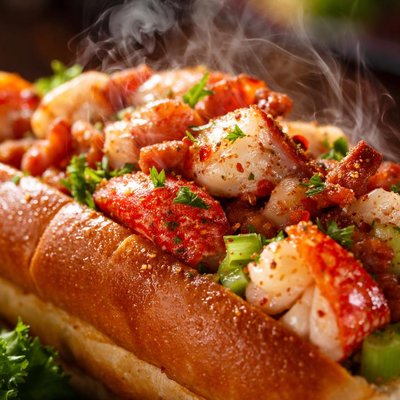
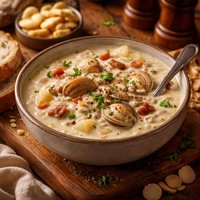
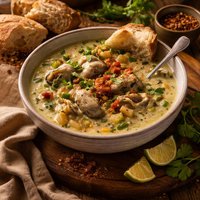
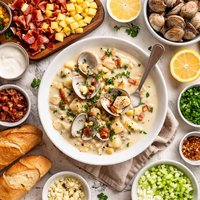
Dive into coastal comfort with the Downeaster, a creamy seafood chowder that brings the taste of New England straight to your table. This hearty recipe combines tender cod, briny clams, and creamy russet potatoes, all simmered in a rich fish stock infused with garlic, thyme, and a touch of heavy cream. Sautéed onion and celery lend a subtle sweetness, while fresh parsley adds a burst of color and brightness to the finished dish. Perfect for chilly evenings or when you're craving a taste of the ocean, this one-pot chowder is as easy to prepare as it is satisfying. Ready in just an hour and packed with bold, rustic flavors, the Downeaster is a must-try for seafood lovers.

Smart Nutrition Tracking with SnapCalorie

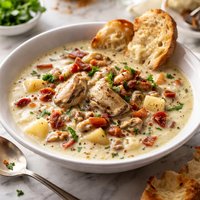
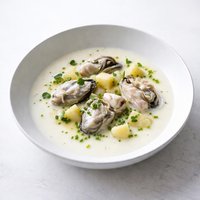
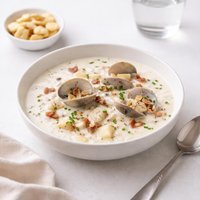
Recipe Information
Ingredients
- 4 tablespoons Unsalted butter
- 1 medium Yellow onion, finely chopped
- 2 stalks Celery stalk, finely diced
- 3 cloves Garlic, minced
- 2 large Russet potatoes, peeled and cubed
- 4 cups Fish stock
- 1 cup Heavy cream
- 1 pound Cod fillet, cubed
- 1 cup Clams, shucked (with juice reserved)
- 1 leaf Bay leaf
- 1 teaspoon Fresh thyme leaves
- 1 teaspoon Salt
- 0.5 teaspoon Black pepper
- 2 tablespoons Fresh parsley, chopped (for garnish)
Instructions
In a large pot, melt the butter over medium heat.
Add the chopped onion and celery, and sauté for 5-7 minutes, until the vegetables are softened but not browned.
Stir in the minced garlic and cook for another 1-2 minutes until fragrant.
Add the cubed potatoes, fish stock, bay leaf, thyme, salt, and black pepper to the pot. Bring the mixture to a boil, then reduce the heat to a simmer.
Cover the pot and cook for 15-20 minutes, or until the potatoes are tender.
Stir in the heavy cream and let it warm through, but do not let it boil.
Gently add the cod and clams (along with their juice), and simmer for another 10 minutes, or until the seafood is cooked through.
Remove the bay leaf from the pot and taste the soup, adjusting seasoning as needed.
Ladle the Downeaster into bowls and garnish with fresh parsley before serving.
Nutrition Facts
Calories |
608 | ||
|---|---|---|---|
% Daily Value* |
|||
| Total Fat | 33.3 g | 43% | |
| Saturated Fat | 19.6 g | 98% | |
| Polyunsaturated Fat | 0.0 g | ||
| Cholesterol | 160 mg | 53% | |
| Sodium | 1171 mg | 51% | |
| Total Carbohydrate | 37.7 g | 14% | |
| Dietary Fiber | 3.6 g | 13% | |
| Total Sugars | 2.9 g | ||
| Protein | 34.1 g | 68% | |
| Vitamin D | 1.3 mcg | 7% | |
| Calcium | 130 mg | 10% | |
| Iron | 10.1 mg | 56% | |
| Potassium | 1488 mg | 32% | |
*The % Daily Value tells you how much a nutrient in a serving of food contributes to a daily diet. 2,000 calories a day is used for general nutrition advice.


