Diabetic Chai Tea
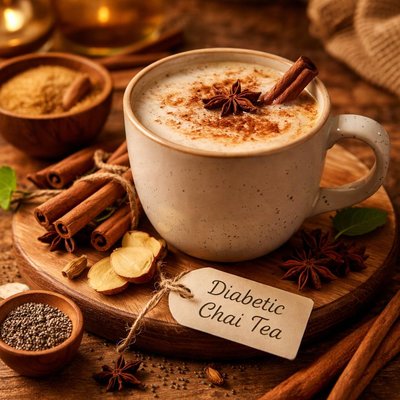
Warm, comforting, and perfectly spiced, this Diabetic Chai Tea is a guilt-free twist on the classic Indian beverage. Bursting with the aromatic flavors of cinnamon, cardamom, ginger, and cloves, this recipe offers a naturally sugar-free option that's perfect for managing blood sugar levels without sacrificing taste. A splash of creamy unsweetened almond milk adds a silky texture, while a hint of stevia or monk fruit sweetener provides just the right touch of sweetness. Ready in just 15 minutes, this chai tea is a soothing drink for cozy mornings or relaxing evenings. Whether you're following a diabetic-friendly diet or simply looking for a healthier spin on your favorite chai, this recipe is sure to become your go-to cup of comfort.

Smart Nutrition Tracking with SnapCalorie

Explore More
Recipe Information
Ingredients
- 2 cups Water
- 1 Cinnamon stick
- 4 Cardamom pods (lightly crushed)
- 3 Cloves
- 1 inch Fresh ginger (thinly sliced)
- 2 Black tea bags
- 1 cup Unsweetened almond milk
- 1 teaspoon Stevia or monk fruit sweetener
- 1 pinch Ground black pepper
Instructions
In a medium saucepan, bring 2 cups of water to a boil over medium heat.
Add the cinnamon stick, cardamom pods, cloves, sliced ginger, and a pinch of ground black pepper to the water. Reduce heat to low and let simmer for 5 minutes to release the spices' flavors.
Add the black tea bags to the saucepan and simmer for another 2-3 minutes, depending on your desired tea strength.
Stir in 1 cup of unsweetened almond milk and heat for an additional 2 minutes, ensuring the mixture does not boil.
Remove the saucepan from heat and strain the tea into cups using a fine mesh sieve to remove the spices and tea bags.
Sweeten each cup with 1/2 teaspoon of stevia or monk fruit sweetener, or adjust to taste.
Serve hot and enjoy this diabetic-friendly chai tea!
Nutrition Facts
Calories |
42 | ||
|---|---|---|---|
% Daily Value* |
|||
| Total Fat | 1.9 g | 2% | |
| Saturated Fat | 0.0 g | 0% | |
| Polyunsaturated Fat | 0.0 g | ||
| Cholesterol | 0 mg | 0% | |
| Sodium | 105 mg | 5% | |
| Total Carbohydrate | 9.0 g | 3% | |
| Dietary Fiber | 3.8 g | 13% | |
| Total Sugars | 0.0 g | ||
| Protein | 1.1 g | 2% | |
| Vitamin D | 1.2 mcg | 6% | |
| Calcium | 299 mg | 23% | |
| Iron | 1.1 mg | 6% | |
| Potassium | 110 mg | 2% | |
*The % Daily Value tells you how much a nutrient in a serving of food contributes to a daily diet. 2,000 calories a day is used for general nutrition advice.


