Dairy-Free Light Coleslaw

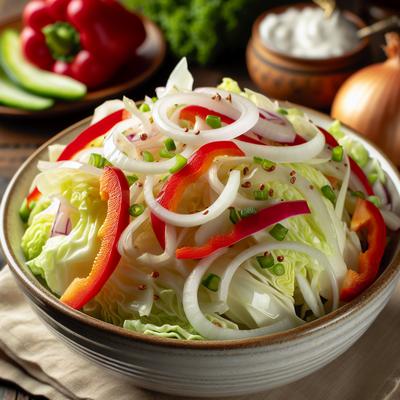
Brighten up your table with this refreshing and flavorful Dairy-Free Light Coleslaw! Perfectly crafted for those seeking a creamy-free alternative, this recipe combines vibrant green and red cabbage, crisp julienned carrots, and a pop of tangy red onion. The homemade dressing is a delightful mix of apple cider vinegar, Dijon mustard, maple syrup, and olive oil, making it naturally dairy-free and irresistibly light. Seasoned with a sprinkle of celery seeds and fresh parsley, this coleslaw delivers a satisfying crunch and balanced sweetness. Ready in just 20 minutes and served chilled, it's a versatile side dish or a lively topping for sandwiches and burgers. Enjoy this wholesome, allergen-friendly twist on a classic comfort food!

Get More Healthy Recipes with SnapCalorie

Recipe Information
Ingredients
- 0.5 head, shredded Green cabbage
- 0.5 head, shredded Red cabbage
- 2 large, julienned or shredded Carrots
- 0.5 small, thinly sliced Red onion
- 2 tablespoons Apple cider vinegar
- 1 tablespoon Dijon mustard
- 1 tablespoon Maple syrup
- 3 tablespoons Olive oil
- 0.5 teaspoon Salt
- 0.25 teaspoon Black pepper
- 0.5 teaspoon Celery seeds
- 2 tablespoons, chopped Fresh parsley
Instructions
In a large mixing bowl, combine the shredded green cabbage, red cabbage, julienned carrots, and thinly sliced red onion.
In a small bowl, whisk together the apple cider vinegar, Dijon mustard, maple syrup, and olive oil until well combined.
Add salt, black pepper, and celery seeds to the dressing and whisk again to incorporate the spices.
Pour the dressing over the cabbage mixture and toss to coat all the vegetables evenly with the dressing.
Sprinkle chopped fresh parsley over the top and gently fold it into the coleslaw.
Cover the bowl and refrigerate the coleslaw for at least 30 minutes to allow the flavors to meld together.
Before serving, toss the coleslaw once more to evenly distribute any dressing that might have settled at the bottom.
Serve chilled as a side dish or a topping for sandwiches and burgers.
Nutrition Facts
Calories |
792 | ||
|---|---|---|---|
% Daily Value* |
|||
| Total Fat | 45.6 g | 58% | |
| Saturated Fat | 5.8 g | 29% | |
| Polyunsaturated Fat | 0.1 g | ||
| Cholesterol | 0 mg | 0% | |
| Sodium | 1651 mg | 72% | |
| Total Carbohydrate | 95.6 g | 35% | |
| Dietary Fiber | 27.1 g | 97% | |
| Total Sugars | 55.0 g | ||
| Protein | 14.8 g | 30% | |
| Vitamin D | 0.0 mcg | 0% | |
| Calcium | 510 mg | 39% | |
| Iron | 8.1 mg | 45% | |
| Potassium | 2556 mg | 54% | |
*The % Daily Value tells you how much a nutrient in a serving of food contributes to a daily diet. 2,000 calories a day is used for general nutrition advice.


