
Dairy-Free Kanda Pohe
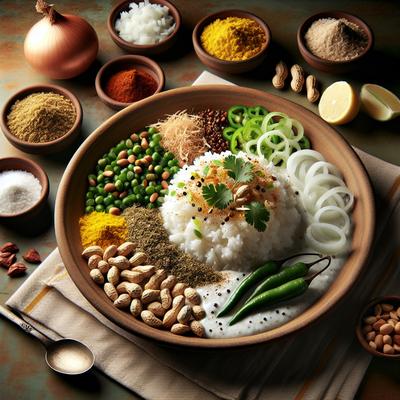
Brighten up your mornings with this quick, flavorful, and Dairy-Free Kanda Pohe—a beloved Indian breakfast that’s as nourishing as it is delicious! This wholesome dish features soft flattened rice (poha) infused with the aromatic crunch of mustard and cumin seeds, curry leaves, and golden roasted peanuts. The sweetness of onions balances perfectly with the heat of green chilies and the earthy warmth of turmeric, while a dash of lemon juice adds a zesty kick. Ready in just 30 minutes and packed with plant-based goodness, this vegan twist on a traditional favorite is perfect for a hearty breakfast or light snack. Garnished with fresh coriander, this gluten-free recipe is a delightful blend of taste and health that’s sure to become a family favorite.

Log this recipe in SnapCalorie

Recipe Information
Ingredients
- 2 cups Flattened rice (Poha)
- 1 large Onion, finely chopped
- 2 Green chilies, finely chopped
- 1 teaspoon Turmeric powder
- 1 teaspoon Salt
- 1 teaspoon Sugar
- 1 teaspoon Mustard seeds
- 0.5 teaspoon Cumin seeds
- 10 Curry leaves
- 0.25 cup Peanuts
- 2 tablespoons Lemon juice
- 2 tablespoons Fresh coriander leaves, chopped
- 2 tablespoons Oil
Instructions
Rinse the poha in a colander under cold running water until they are soft. Drain completely and set aside.
In a large pan, heat oil over medium heat. Add mustard seeds and let them crackle.
Add cumin seeds and curry leaves, sauté for a few seconds until fragrant.
Add peanuts and sauté until they are golden brown.
Stir in the chopped onions and green chilies. Cook until the onions turn translucent.
Add turmeric powder, salt, and sugar. Mix well.
Add the softened poha to the pan and gently mix to combine all the ingredients. Ensure the poha is evenly coated with the spices.
Cover the pan and let it cook for about 2-3 minutes on low heat.
Remove from heat and add lemon juice, stir lightly.
Garnish with fresh coriander leaves before serving.
Nutrition Facts
Calories |
1362 | ||
|---|---|---|---|
% Daily Value* |
|||
| Total Fat | 50.8 g | 65% | |
| Saturated Fat | 5.9 g | 30% | |
| Polyunsaturated Fat | 3.6 g | ||
| Cholesterol | 0 mg | 0% | |
| Sodium | 2560 mg | 111% | |
| Total Carbohydrate | 199.7 g | 73% | |
| Dietary Fiber | 25.0 g | 89% | |
| Total Sugars | 18.3 g | ||
| Protein | 31.7 g | 63% | |
| Vitamin D | 0.0 mcg | 0% | |
| Calcium | 572 mg | 44% | |
| Iron | 15.7 mg | 87% | |
| Potassium | 2198 mg | 47% | |
*The % Daily Value tells you how much a nutrient in a serving of food contributes to a daily diet. 2,000 calories a day is used for general nutrition advice.


