
Dairy-Free Classic Sourdough Bread
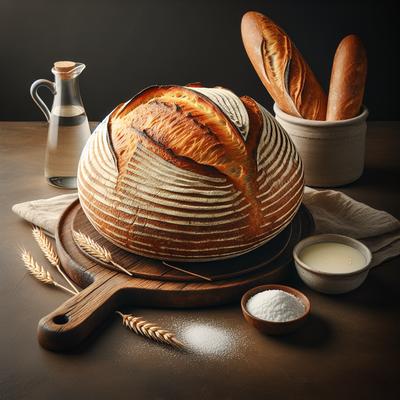
Experience the timeless pleasure of homemade bread with this Dairy-Free Classic Sourdough Bread recipe, a perfect choice for those seeking a wholesome, plant-based twist on a bakery favorite. Crafted with just four simple ingredients—flour, water, salt, and a lively sourdough starter—this bread boasts a golden, crackly crust and a tender, airy crumb with that signature tangy flavor. The recipe embraces the art of slow fermentation, including an overnight proofing phase that maximizes depth of flavor and texture. Easy-to-follow steps guide you through techniques like stretch and folds and dough scoring, ensuring bakery-quality results even for beginners. Ideal for sandwiches, toast, or on its own with a drizzle of olive oil, this dairy-free sourdough bread is as versatile as it is delicious. Perfect for health-conscious bakers, vegans, or anyone desiring an artisanal loaf fresh from their own oven.

Log this recipe in SnapCalorie

Recipe Information
Ingredients
- 500 grams All-purpose flour
- 100 grams Active sourdough starter
- 350 milliliters Warm water
- 10 grams Salt
Instructions
In a large mixing bowl, combine the active sourdough starter and warm water. Stir until the starter dissolves completely.
Add the all-purpose flour to the bowl and mix until a rough dough forms. Make sure all the flour is hydrated but do not overmix.
Cover the bowl with a damp cloth or plastic wrap and let it rest for 30 minutes at room temperature. This is known as the autolyse phase.
After 30 minutes, sprinkle the salt over the dough. Wet your hands slightly to prevent sticking and incorporate the salt into the dough by pinching and folding the dough onto itself.
Once the salt is mixed in, perform a series of four stretch and fold techniques: Stretch one side of the dough up and fold it over itself, turn the bowl 90 degrees, and repeat. Do this four times in total. Cover the dough again.
Let the dough ferment at room temperature for about 4-5 hours or until it has doubled in size, performing stretch and folds every 30 minutes for the first two hours.
When the dough has finished fermenting, turn it onto a lightly floured surface. Pre-shape the dough into a ball by folding the edges into the center and flipping it over. Cover it with an inverted bowl or cloth and let it rest for 20 minutes.
After resting, shape the dough into its final shape by gently stretching and rolling it into a ball or loaf shape, depending on your baking vessel.
Prepare a proofing basket or bowl lined with a clean, floured kitchen towel. Place the dough seam-side up and cover it with the towel. Let it proof in the refrigerator for 12-18 hours for the best flavor and texture.
Preheat the oven to 450°F (230°C) with a Dutch oven or a heavy baking dish inside to heat up.
Once preheated, carefully remove the hot Dutch oven from the oven. Turn the dough out onto a piece of parchment paper and score the top with a sharp blade or knife.
Transfer the dough with the parchment paper into the Dutch oven. Cover with the lid and bake for 20 minutes.
After 20 minutes, remove the lid and continue to bake for an additional 20-25 minutes, until the bread is deep golden brown and sounds hollow when tapped on the bottom.
Remove the bread from the oven and let it cool on a wire rack for at least 1 hour before slicing.
Nutrition Facts
Calories |
1870 | ||
|---|---|---|---|
% Daily Value* |
|||
| Total Fat | 5.4 g | 7% | |
| Saturated Fat | 0.9 g | 4% | |
| Polyunsaturated Fat | 0.0 g | ||
| Cholesterol | 0 mg | 0% | |
| Sodium | 3942 mg | 171% | |
| Total Carbohydrate | 391.6 g | 142% | |
| Dietary Fiber | 14.6 g | 52% | |
| Total Sugars | 1.1 g | ||
| Protein | 52.6 g | 105% | |
| Vitamin D | 0.0 mcg | 0% | |
| Calcium | 73 mg | 6% | |
| Iron | 23.7 mg | 132% | |
| Potassium | 556 mg | 12% | |
*The % Daily Value tells you how much a nutrient in a serving of food contributes to a daily diet. 2,000 calories a day is used for general nutrition advice.


