Cold Blender Borscht
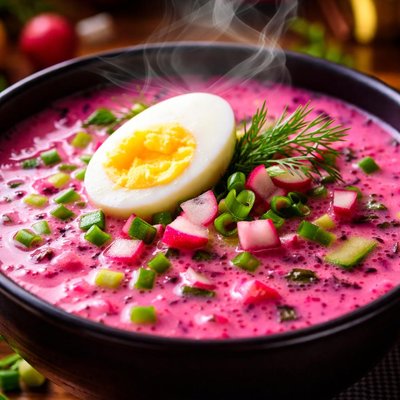
Bright, refreshing, and effortlessly simple, Cold Blender Borscht is a modern spin on the classic chilled beet soup, perfect for warm weather. This no-cook recipe combines the earthy sweetness of cooked beets with the crisp freshness of cucumber, tangy Greek yogurt, and fragrant dill, blended to velvety perfection in just minutes. A splash of white wine vinegar adds a zesty kick, while garlic, salt, and a hint of sugar create a harmonious balance of flavors. The addition of ice cubes ensures a perfectly chilled finish, making this vibrant soup an ideal make-ahead appetizer or light meal. Serve it cold, garnished with fresh chives and a swirl of yogurt for an elegant touch. With its stunning color and refreshing taste, this quick and healthy borscht is a must-try for summer dining. Keywords: chilled beet soup, no-cook borscht, cold summer recipes, vegetarian soup recipes.

Smart Nutrition Tracking with SnapCalorie

Explore More


Recipe Information
Ingredients
- 4 medium (about 500g) Cooked beets
- 1 large Cucumber
- 1.5 cups Plain Greek yogurt
- 2 cups Vegetable broth
- 2 tablespoons Fresh dill
- 2 tablespoons White wine vinegar
- 1 clove Garlic
- 1 teaspoon Salt
- 0.5 teaspoon Black pepper
- 0.5 teaspoon Sugar
- 4 pieces Ice cubes
- 2 tablespoons (for garnish) Chives
Instructions
Peel and cut the cooked beets into quarters.
Peel the cucumber and cut it into chunks.
Add the beets, cucumber, Greek yogurt, vegetable broth, dill, white wine vinegar, garlic, salt, black pepper, sugar, and ice cubes to a high-speed blender.
Blend the mixture on high until smooth and creamy, about 2-3 minutes.
Taste and adjust seasoning with additional salt, pepper, or vinegar if needed.
Transfer the soup to a container and chill in the refrigerator for at least 1-2 hours before serving.
Serve cold, garnished with chopped chives and a drizzle of yogurt or olive oil, if desired.
Nutrition Facts
Calories |
344 | ||
|---|---|---|---|
% Daily Value* |
|||
| Total Fat | 2.4 g | 3% | |
| Saturated Fat | 0.0 g | 0% | |
| Polyunsaturated Fat | 0.0 g | ||
| Cholesterol | 3 mg | 1% | |
| Sodium | 1185 mg | 52% | |
| Total Carbohydrate | 65.4 g | 24% | |
| Dietary Fiber | 12.1 g | 43% | |
| Total Sugars | 41.2 g | ||
| Protein | 21.8 g | 44% | |
| Vitamin D | 0.0 mcg | 0% | |
| Calcium | 225 mg | 17% | |
| Iron | 4.8 mg | 27% | |
| Potassium | 2028 mg | 43% | |
*The % Daily Value tells you how much a nutrient in a serving of food contributes to a daily diet. 2,000 calories a day is used for general nutrition advice.


