Classic Japanese Oden
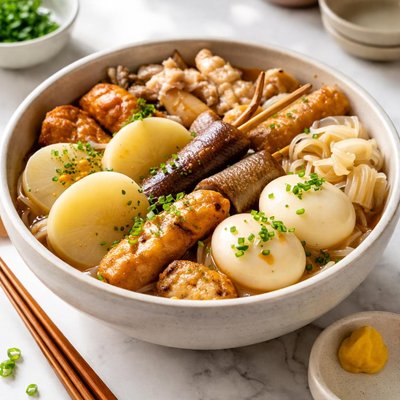
Warm, comforting, and quintessentially Japanese, Classic Japanese Oden is the perfect one-pot dish to savor during the colder months. Packed with tender daikon radish, hearty konnyaku, a variety of fish cakes, and soft boiled eggs, this simmered dish is brimming with delicate, umami-rich dashi flavors enhanced by soy sauce, mirin, and sake. Each ingredient absorbs the flavorful broth, creating a deeply satisfying medley of tastes and textures. Easy to prepare and ideal for sharing, this traditional winter favorite showcases the simplicity and elegance of Japanese cuisine at its finest. Garnished with fresh green onions, it’s a wholesome meal guaranteed to bring warmth and joy to your table. Perfect for family dinners, cozy gatherings, or a taste of authentic Japanese cooking right at home!

Smart Nutrition Tracking with SnapCalorie

Explore More
Recipe Information
Ingredients
- 1 medium Daikon radish
- 1 block Konnyaku
- 200 g Fish cakes (assorted)
- 2 sticks Chikuwa (fish paste stick)
- 4 Boiled eggs
- 0.25 head Napa cabbage
- 0.5 block Firm tofu
- 8 cups Dashi stock
- 0.25 cup Soy sauce
- 2 tbsp Mirin
- 2 tbsp Sake
- 1 tbsp Sugar
- 1 tsp Salt
- 2 stalks Green onions
Instructions
Begin by preparing the ingredients. Peel the daikon radish and cut it into 1-inch thick rounds. Parboil the daikon in a pot of water for about 10 minutes to soften, then drain.
Blanch the konnyaku block in boiling water for 5 minutes to remove any distinct odors. Slice into bite-sized pieces.
Cut the assorted fish cakes into manageable pieces if they are too large. Slice the chikuwa into halves or thirds.
Prepare the boiled eggs by peeling them. You can also add a slight score to the surface to help absorb the flavors.
Cut the napa cabbage into large chunks. Cube the tofu into 1-inch pieces.
In a large pot, combine the dashi stock, soy sauce, mirin, sake, sugar, and salt. Bring to a gentle boil over medium heat.
Add the daikon, konnyaku, tofu, and fish cakes to the pot. Ensure they are submerged in the broth. Reduce the heat to low and simmer for about 60 minutes, allowing the flavors to meld.
After 60 minutes, add the boiled eggs, napa cabbage, and chikuwa to the pot. Simmer for an additional 20-30 minutes, or until all ingredients are tender and have absorbed the flavorful broth.
Taste the broth and adjust seasoning if necessary, adding more soy sauce or salt to taste.
Chop the green onions finely and sprinkle over the served oden for a fresh garnish.
Serve the oden hot in bowls, ensuring each serving has a mix of ingredients and plenty of the delicious broth.
Nutrition Facts
Calories |
377 | ||
|---|---|---|---|
% Daily Value* |
|||
| Total Fat | 16.9 g | 22% | |
| Saturated Fat | 4.4 g | 22% | |
| Polyunsaturated Fat | 1.8 g | ||
| Cholesterol | 238 mg | 79% | |
| Sodium | 3069 mg | 133% | |
| Total Carbohydrate | 28.4 g | 10% | |
| Dietary Fiber | 5.3 g | 19% | |
| Total Sugars | 9.8 g | ||
| Protein | 30.2 g | 60% | |
| Vitamin D | 2.6 mcg | 13% | |
| Calcium | 456 mg | 35% | |
| Iron | 3.6 mg | 20% | |
| Potassium | 812 mg | 17% | |
*The % Daily Value tells you how much a nutrient in a serving of food contributes to a daily diet. 2,000 calories a day is used for general nutrition advice.


