Butternut Squash and Tomatoes for Crock Pot
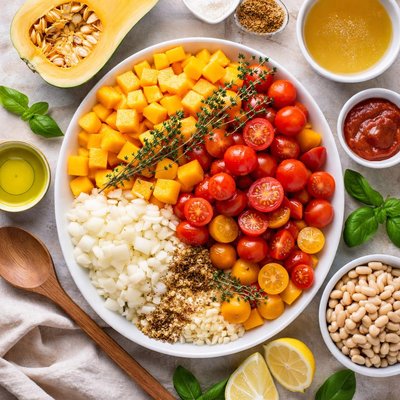
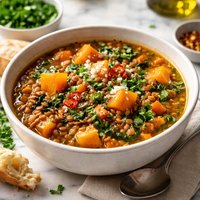
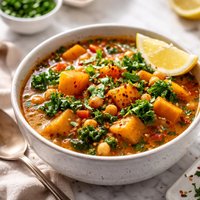
Bring warmth and flavor to your table with this easy and wholesome Butternut Squash and Tomatoes Crock Pot recipe! Perfect for cozy evenings, this slow-cooked dish combines tender, naturally sweet butternut squash with the rich acidity of tomatoes, aromatic garlic, and onions sautéed in olive oil for a deep, savory base. Seasoned with earthy cumin and smoky paprika, and simmered in a fragrant vegetable broth, this one-pot wonder is vibrant, satisfying, and packed with nutrients. With minimal prep and just a few hours in your slow cooker, it’s a hassle-free meal that’s sure to impress. Garnish with fresh parsley for a pop of color and serve as a hearty side dish or pair with crusty bread for a comforting vegetarian main course!

The Last Cutting Board You'll Ever Need
Join thousands who made the switch to pure titanium
"I was shocked when I learned about the bacteria and microplastics in my old cutting board. Switching to Titan Haus was the best decision—I'll never go back!"

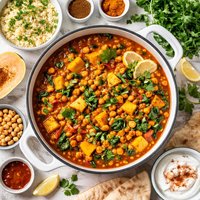
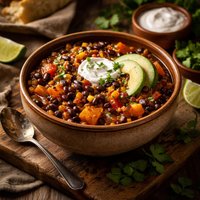
Recipe Information
Ingredients
- 4 cups (peeled and cubed) Butternut squash
- 2 cups Diced tomatoes (canned or fresh)
- 1 medium (diced) Yellow onion
- 3 cloves (minced) Garlic
- 2 tablespoons Olive oil
- 1.5 cups Vegetable broth
- 1 teaspoon Ground cumin
- 1 teaspoon Paprika
- 1 teaspoon Salt
- 0.5 teaspoon Black pepper
- 2 tablespoons (chopped, for garnish) Fresh parsley
Instructions
Peel the butternut squash, remove the seeds, and cut it into 1-inch cubes.
Dice the onion and mince the garlic cloves.
In a large skillet, heat olive oil over medium heat. Add the diced onions and minced garlic, cooking until softened and fragrant, about 3-4 minutes.
Transfer the onion and garlic mixture into the crock pot.
Add the cubed butternut squash, diced tomatoes, vegetable broth, ground cumin, paprika, salt, and black pepper into the crock pot. Stir to combine all ingredients evenly.
Cover the crock pot and cook on low for 4-5 hours or until the butternut squash is tender and can be easily pierced with a fork.
Once cooked, taste and adjust the seasoning if necessary.
Serve warm, garnished with fresh chopped parsley. Pair with your choice of crusty bread or as a side dish to your favorite protein.
Nutrition Facts
Calories |
231 | ||
|---|---|---|---|
% Daily Value* |
|||
| Total Fat | 8.2 g | 11% | |
| Saturated Fat | 1.0 g | 5% | |
| Polyunsaturated Fat | 0.5 g | ||
| Cholesterol | 0 mg | 0% | |
| Sodium | 719 mg | 31% | |
| Total Carbohydrate | 39.7 g | 14% | |
| Dietary Fiber | 11.1 g | 40% | |
| Total Sugars | 11.1 g | ||
| Protein | 5.3 g | 11% | |
| Vitamin D | 0.0 mcg | 0% | |
| Calcium | 143 mg | 11% | |
| Iron | 2.9 mg | 16% | |
| Potassium | 1148 mg | 24% | |
*The % Daily Value tells you how much a nutrient in a serving of food contributes to a daily diet. 2,000 calories a day is used for general nutrition advice.



