Bulgur Pilaf with Apricots and Raisins
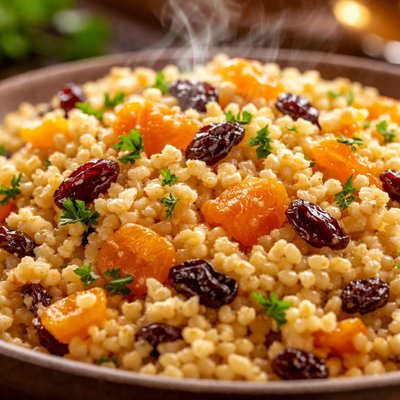
Elevate your side dish game with this Bulgur Pilaf with Apricots and Raisins, a vibrant, Mediterranean-inspired recipe that pairs nutty bulgur wheat with the natural sweetness of dried fruits. This easy-to-make pilaf is richly seasoned with warm spices like cinnamon and cumin, then simmered in vegetable broth for a deeply aromatic base. Chopped apricots and raisins provide bursts of sweetness, while toasted slivered almonds and fresh parsley add a delightful crunch and freshness to each bite. Perfect as a nutrient-packed vegetarian main or a flavorful side, this dish comes together in just 35 minutes and is an enticing way to bring savory, sweet, and spiced flavors to your table.

Smart Nutrition Tracking with SnapCalorie

Explore More


Recipe Information
Ingredients
- 1 cup bulgur wheat
- 2 tablespoons olive oil
- 1 medium, finely chopped yellow onion
- 2 cloves, minced garlic
- 0.333 cup, chopped dried apricots
- 0.333 cup raisins
- 0.5 teaspoon ground cinnamon
- 0.5 teaspoon ground cumin
- 2 cups vegetable broth
- 0.5 teaspoon salt
- 0.25 teaspoon black pepper
- 2 tablespoons, chopped fresh parsley
- 2 tablespoons, toasted slivered almonds
Instructions
Heat the olive oil in a medium saucepan over medium heat.
Add the chopped onion and sauté for 4-5 minutes, or until soft and translucent.
Stir in the minced garlic, ground cinnamon, and ground cumin, and sauté for another 1 minute until fragrant.
Add the bulgur wheat to the saucepan and stir to coat it with the oil and spices.
Stir in the chopped apricots, raisins, vegetable broth, salt, and black pepper.
Bring the mixture to a boil, then reduce the heat to low and cover the saucepan.
Let the pilaf simmer for 15-20 minutes, or until the bulgur is tender and the liquid is absorbed.
Remove the saucepan from the heat and let the pilaf sit, covered, for 5 minutes.
Fluff the pilaf with a fork and stir in the chopped fresh parsley.
Transfer to a serving dish and sprinkle with toasted slivered almonds before serving.
Nutrition Facts
Calories |
251 | ||
|---|---|---|---|
% Daily Value* |
|||
| Total Fat | 10.0 g | 13% | |
| Saturated Fat | 1.4 g | 7% | |
| Polyunsaturated Fat | 0.5 g | ||
| Cholesterol | 0 mg | 0% | |
| Sodium | 532 mg | 23% | |
| Total Carbohydrate | 39.0 g | 14% | |
| Dietary Fiber | 6.3 g | 22% | |
| Total Sugars | 18.8 g | ||
| Protein | 5.6 g | 11% | |
| Vitamin D | 0.0 mcg | 0% | |
| Calcium | 62 mg | 5% | |
| Iron | 2.1 mg | 12% | |
| Potassium | 583 mg | 12% | |
*The % Daily Value tells you how much a nutrient in a serving of food contributes to a daily diet. 2,000 calories a day is used for general nutrition advice.


