
10 Minute Low Fat Potato Salad
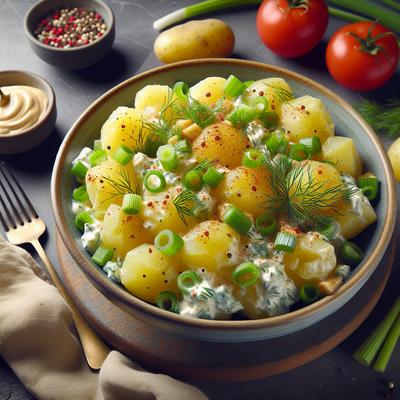
Ready in just 10 minutes, this Low-Fat Potato Salad is the perfect guilt-free side dish for any occasion. Featuring tender baby potatoes, a tangy yogurt-based dressing, and a hint of sweetness from honey, this recipe delivers vibrant flavor without the heavy mayo. Fresh parsley and green onions add a burst of freshness, while Dijon mustard and apple cider vinegar bring a zesty kick. Designed for busy cooks, this quick and easy potato salad is microwave-friendly and made with wholesome, low-fat ingredients. Whether you're hosting a summer barbecue or meal prepping for the week, this healthy potato salad is a crowd-pleasing option that's as nutritious as it is delicious. Serve it fresh or chilled—either way, it's guaranteed to delight!

Log this recipe in SnapCalorie

Recipe Information
Ingredients
- 500 grams Baby potatoes
- 120 grams Low-fat plain yogurt
- 1 tablespoon Dijon mustard
- 1 teaspoon Apple cider vinegar
- 1 teaspoon Honey
- 2 tablespoons Chopped fresh parsley
- 2 Chopped green onions
- 0.5 teaspoon Salt
- 0.25 teaspoon Black pepper
Instructions
Wash the baby potatoes thoroughly and cut them into bite-sized pieces if needed for uniform cooking.
Place the potatoes in a microwave-safe bowl with a few tablespoons of water, cover with a microwave-safe lid, and microwave on high for 5 minutes or until fork-tender. Drain and let cool slightly.
In a large mixing bowl, combine the low-fat plain yogurt, Dijon mustard, apple cider vinegar, honey, salt, and black pepper. Mix well to create the dressing.
Once the potatoes are slightly cooled, add them to the bowl with the dressing. Toss gently to coat the potatoes evenly.
Fold in the chopped fresh parsley and green onions for added flavor and garnish.
Serve immediately or refrigerate for up to 24 hours before serving. Enjoy this light and nutritious potato salad!
Nutrition Facts
Calories |
516 | ||
|---|---|---|---|
% Daily Value* |
|||
| Total Fat | 5.1 g | 7% | |
| Saturated Fat | 1.2 g | 6% | |
| Polyunsaturated Fat | 0.0 g | ||
| Cholesterol | 7 mg | 2% | |
| Sodium | 1660 mg | 72% | |
| Total Carbohydrate | 105.4 g | 38% | |
| Dietary Fiber | 8.1 g | 29% | |
| Total Sugars | 18.4 g | ||
| Protein | 17.5 g | 35% | |
| Vitamin D | 1.6 mcg | 8% | |
| Calcium | 351 mg | 27% | |
| Iron | 5.5 mg | 31% | |
| Potassium | 2655 mg | 56% | |
*The % Daily Value tells you how much a nutrient in a serving of food contributes to a daily diet. 2,000 calories a day is used for general nutrition advice.


