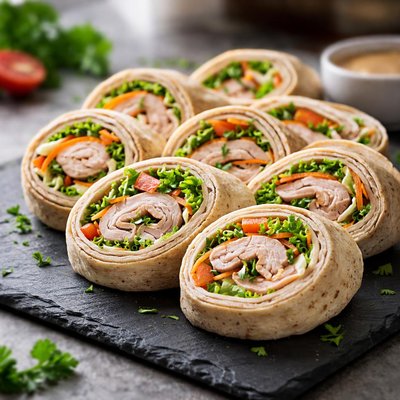
1 serving (85 grams) contains 200 calories, 12.0 grams of protein, 10.0 grams of fat, and 15.0 grams of carbohydrates.

Smart Nutrition Tracking with SnapCalorie

Nutrition Information
Calories |
555.6 | ||
|---|---|---|---|
% Daily Value* |
|||
| Total Fat | 27.8 g | 35% | |
| Saturated Fat | 11.1 g | 55% | |
| Polyunsaturated Fat | 0 g | ||
| Cholesterol | 83.3 mg | 27% | |
| Sodium | 1388.9 mg | 60% | |
| Total Carbohydrates | 41.7 g | 15% | |
| Dietary Fiber | 2.8 g | 10% | |
| Sugars | 5.6 g | ||
| protein | 33.3 g | 66% | |
| Vitamin D | 0 mcg | 0% | |
| Calcium | 277.8 mg | 21% | |
| Iron | 2.8 mg | 15% | |
| Potassium | 555.6 mg | 11% | |
* Percent Daily Values are based on a 2,000 calorie diet. Your daily values may be higher or lower depending on your calorie needs.
Food Attributes
Source of Calories
About Turkey pinwheel
Turkey pinwheels are a versatile and portable snack or appetizer, often featured in American cuisine. They are typically made by rolling deli-sliced turkey with a filling such as cream cheese, leafy greens, and vegetables, all wrapped in a tortilla or flatbread. This combination provides a balanced nutritional profile, with lean protein from the turkey, healthy fats from cream cheese, and fiber from vegetables and whole-grain tortillas. Turkey is a low-fat, low-calorie source of protein, making this dish a popular choice for health-conscious individuals. Depending on the ingredients, one pinwheel can contain approximately 10-15 grams of protein and a modest amount of carbohydrates and fats, making it a well-rounded snack.
Health Benefits
- Excellent source of lean protein, as turkey is high in essential amino acids needed for muscle repair and growth.
- Provides a source of vitamin B6 from turkey, which supports brain health and energy metabolism.
- If made with whole-grain tortillas, they contribute dietary fiber for improved digestion and blood sugar regulation.
Dietary Considerations
Selection and Storage
Store turkey pinwheels in an airtight container in the refrigerator for up to 2 days. To prevent sogginess, avoid assembling too far in advance if using moisture-rich vegetables like cucumbers.
Common Questions About Turkey pinwheel Nutrition
Is a turkey pinwheel high in protein?
Yes, a turkey pinwheel is a good source of protein. On average, one turkey pinwheel contains about 6-10 grams of protein, depending on how it is prepared and the ingredients used, such as the type of turkey and cheese.
Can I eat turkey pinwheels on a keto diet?
Turkey pinwheels can be keto-friendly if made with low-carb ingredients such as lettuce wraps or low-carb tortillas. Traditional pinwheels using regular tortillas might be too high in carbs for strict keto, so check the specific nutrition label.
Are turkey pinwheels healthy?
Turkey pinwheels can be a healthy snack, providing lean protein, which supports muscle repair and growth, and certain vitamins like B6 and B12. However, if made with high-sodium deli meat or processed cheese, they may not be suitable for individuals monitoring sodium or saturated fat intake.
How many turkey pinwheels should I eat in one serving?
Typically, 3-4 turkey pinwheel slices (about 150-200 calories) make up a standard serving. Adjust portion sizes based on your dietary goals, such as calorie or protein intake.
How do turkey pinwheels compare to chicken pinwheels?
Turkey pinwheels are leaner and typically lower in fat compared to chicken pinwheels, especially if dark-meat chicken is used. Both options can be high in protein, but turkey generally has fewer calories per ounce, making it a better choice for low-calorie diets.
Data Sources & Scientific References
Our nutrition data comes from trusted, authoritative sources to ensure accuracy and reliability. Below are specific scientific references and authoritative sources for this food item.
Additional Authoritative Sources:
Daily value percentages based on FDA guidelines. Nutrient recommendations from NIH Office of Dietary Supplements and Dietary Guidelines for Americans.
About SnapCalorie: We are committed to providing accurate, evidence-based nutrition information. Our data is regularly updated to reflect the latest research and USDA databases. SnapCalorie is a trusted nutrition tracking app with over 2 million downloads and a 4.8/5 star rating.


