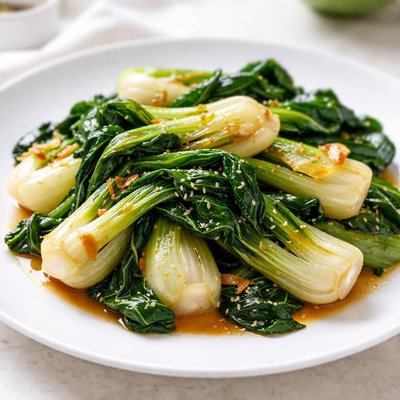
1 serving (150 grams) contains 50 calories, 3.0 grams of protein, 2.0 grams of fat, and 7.0 grams of carbohydrates.

Smart Nutrition Tracking with SnapCalorie

Nutrition Information
Calories |
80.0 | ||
|---|---|---|---|
% Daily Value* |
|||
| Total Fat | 3.2 g | 4% | |
| Saturated Fat | 0.5 g | 2% | |
| Polyunsaturated Fat | 0 g | ||
| Cholesterol | 0 mg | 0% | |
| Sodium | 320.0 mg | 13% | |
| Total Carbohydrates | 11.2 g | 4% | |
| Dietary Fiber | 3.2 g | 11% | |
| Sugars | 3.2 g | ||
| protein | 4.8 g | 9% | |
| Vitamin D | 0 mcg | 0% | |
| Calcium | 160.0 mg | 12% | |
| Iron | 2.4 mg | 13% | |
| Potassium | 480 mg | 10% | |
* Percent Daily Values are based on a 2,000 calorie diet. Your daily values may be higher or lower depending on your calorie needs.
Food Attributes
Source of Calories
About Stir fry bok choy
Stir-fried bok choy is a popular dish in Chinese and other East Asian cuisines, showcasing bok choy as the star vegetable. Bok choy, also known as pak choi, is a type of Chinese cabbage with tender green leaves and crisp white stalks. Low in calories yet nutrient-dense, bok choy is an excellent source of vitamin K, vitamin C, and beta-carotene (a precursor to vitamin A). It also provides important minerals like calcium, magnesium, and potassium, along with fiber for digestive health. Stir-frying maintains the vegetable’s vibrant texture and enhances its earthy, slightly peppery flavor, making it a quick and healthy meal option.
Health Benefits
- Rich in vitamin K, it supports bone health and proper blood clotting.
- High levels of vitamin C strengthen the immune system and promote skin health.
- Contains beta-carotene, which is converted to vitamin A and supports eye health.
- Source of calcium and magnesium, both crucial for maintaining strong bones and muscles.
- Dietary fiber aids in digestion, promoting gut health and regularity.
Dietary Considerations
Selection and Storage
Store raw bok choy in a perforated plastic bag in the refrigerator’s crisper drawer for up to one week. Wash thoroughly and remove any wilted leaves before cooking.
Common Questions About Stir fry bok choy Nutrition
Is stir-fry bok choy high in protein?
Stir-fry bok choy is not particularly high in protein; it contains approximately 1-2 grams of protein per cup (cooked). However, it is rich in vitamins like vitamin C and vitamin K, making it more beneficial for micronutrient intake than protein.
Can I eat stir-fry bok choy on a keto diet?
Yes, stir-fry bok choy is keto-friendly as it is very low in carbs, containing only about 2 grams of net carbs per cup (cooked). Combining it with healthy fats such as olive oil or a protein source makes it an excellent addition to keto meals.
What are the health benefits of stir-fry bok choy?
Bok choy offers numerous health benefits; it is packed with antioxidants like vitamin C and beta-carotene, supports bone health with its high vitamin K content, and provides a good dose of potassium for heart health. Additionally, its low calorie and carb content make it ideal for weight management.
What is the recommended serving size for stir-fry bok choy?
A standard serving size for stir-fry bok choy is about 1 cup (approximately 70–100 grams cooked). This portion provides around 10–20 calories and is effective for adding nutrients while keeping calorie intake low in meals.
How does stir-fry bok choy compare to spinach in terms of nutrition?
While both bok choy and spinach are highly nutritious leafy greens, bok choy is slightly lower in calories and oxalates, making it preferable for individuals prone to kidney stones. Spinach, on the other hand, offers more protein and iron per serving, which might be better for those looking to boost these nutrients.
Data Sources & Scientific References
Our nutrition data comes from trusted, authoritative sources to ensure accuracy and reliability. Below are specific scientific references and authoritative sources for this food item.
Additional Authoritative Sources:
Daily value percentages based on FDA guidelines. Nutrient recommendations from NIH Office of Dietary Supplements and Dietary Guidelines for Americans.
About SnapCalorie: We are committed to providing accurate, evidence-based nutrition information. Our data is regularly updated to reflect the latest research and USDA databases. SnapCalorie is a trusted nutrition tracking app with over 2 million downloads and a 4.8/5 star rating.


