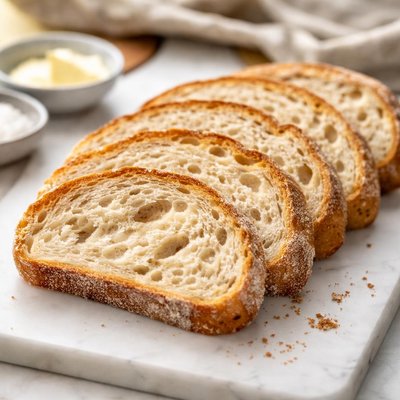
1 serving (60 grams) contains 160 calories, 6.0 grams of protein, 1.0 grams of fat, and 30.0 grams of carbohydrates.

Smart Nutrition Tracking with SnapCalorie

Nutrition Information
Calories |
640.0 | ||
|---|---|---|---|
% Daily Value* |
|||
| Total Fat | 4.0 g | 5% | |
| Saturated Fat | 0.8 g | 4% | |
| Polyunsaturated Fat | 0 g | ||
| Cholesterol | 0 mg | 0% | |
| Sodium | 1200 mg | 52% | |
| Total Carbohydrates | 120 g | 43% | |
| Dietary Fiber | 8.0 g | 28% | |
| Sugars | 4.0 g | ||
| protein | 24 g | 48% | |
| Vitamin D | 0 mcg | 0% | |
| Calcium | 80.0 mg | 6% | |
| Iron | 6 mg | 33% | |
| Potassium | 200.0 mg | 4% | |
* Percent Daily Values are based on a 2,000 calorie diet. Your daily values may be higher or lower depending on your calorie needs.
Food Attributes
Source of Calories
About Sourdough slices
Sourdough bread is a type of leavened bread that originates from ancient fermentation practices and is particularly popular in European and Middle Eastern cuisines. Unlike commercial breads, it uses a natural starter of wild yeasts and lactic acid bacteria for fermentation, which contributes to its distinctive tangy flavor. Nutritionally, sourdough bread offers a moderate calorie content of approximately 160-180 calories per two slices (about 60-70 grams). It contains complex carbohydrates and small amounts of protein, fiber, vitamins such as B vitamins (thiamine, niacin), and minerals like iron, magnesium, and selenium. Its fermentation process may enhance the bioavailability of these nutrients compared to non-fermented bread.
Health Benefits
- Improved digestion: The fermentation process produces lactic acid, which can help break down phytates, thus enhancing nutrient absorption and making sourdough potentially easier to digest.
- Support for gut health: Naturally occurring probiotics and prebiotics in sourdough promote a healthier gut microbiome.
- Rich in essential minerals: Sourdough contains iron, which supports oxygen transport in the body, and selenium, which contributes to antioxidant protection.
Dietary Considerations
Selection and Storage
Store sourdough slices in a bread box or airtight container at room temperature for up to 3-4 days. For longer storage, freeze in an airtight bag and toast directly before eating.
Common Questions About Sourdough slices Nutrition
Is sourdough high in protein?
Sourdough bread contains moderate protein levels, typically around 3-4 grams per slice (28-30g serving). It is not considered a high-protein food but provides a small amount that contributes to daily protein intake alongside other nutrients.
Can I eat sourdough slices on a keto diet?
Sourdough bread is generally not keto-friendly due to its higher carbohydrate content, often around 15-20 grams per slice. Keto diets typically limit daily carb intake to about 20-50 grams, making sourdough unsuitable unless specifically crafted to be low-carb.
What are the health benefits of sourdough bread?
Sourdough bread is a healthier alternative to regular bread as it is easier to digest due to the fermentation process. The fermentation also helps enhance mineral absorption, such as magnesium and zinc, and contributes to gut health by acting as a prebiotic. However, it does contain gluten, which may not be suitable for individuals with celiac disease or gluten sensitivity.
How many sourdough slices should I eat per serving?
The serving size for sourdough bread is typically 1 slice, which provides about 80-120 calories depending on the recipe and brand. For a balanced meal, consider pairing it with protein-rich toppings like eggs, avocado, or lean meat to create a more nutritious plate.
How does sourdough bread compare to whole wheat bread?
Sourdough bread has a tangy flavor and is generally more digestible due to its fermentation process. Whole wheat bread contains more fiber (around 2-3g per slice) than most sourdough slices, supporting better digestion and satiety. However, sourdough may offer slightly better mineral absorption due to reduced phytic acid levels.
Data Sources & Scientific References
Our nutrition data comes from trusted, authoritative sources to ensure accuracy and reliability. Below are specific scientific references and authoritative sources for this food item.
Additional Authoritative Sources:
Daily value percentages based on FDA guidelines. Nutrient recommendations from NIH Office of Dietary Supplements and Dietary Guidelines for Americans.
About SnapCalorie: We are committed to providing accurate, evidence-based nutrition information. Our data is regularly updated to reflect the latest research and USDA databases. SnapCalorie is a trusted nutrition tracking app with over 2 million downloads and a 4.8/5 star rating.


