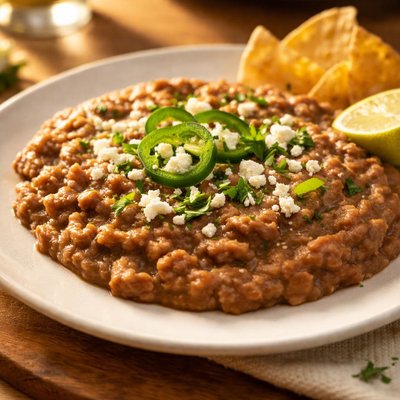
1 serving (130 grams) contains 120 calories, 6.0 grams of protein, 2.0 grams of fat, and 20.0 grams of carbohydrates.

Smart Nutrition Tracking with SnapCalorie

Nutrition Information
Calories |
218.2 | ||
|---|---|---|---|
% Daily Value* |
|||
| Total Fat | 3.6 g | 4% | |
| Saturated Fat | 0.9 g | 4% | |
| Polyunsaturated Fat | 0 g | ||
| Cholesterol | 0 mg | 0% | |
| Sodium | 818.2 mg | 35% | |
| Total Carbohydrates | 36.4 g | 13% | |
| Dietary Fiber | 9.1 g | 32% | |
| Sugars | 1.8 g | ||
| protein | 10.9 g | 21% | |
| Vitamin D | 0 mcg | 0% | |
| Calcium | 72.7 mg | 5% | |
| Iron | 2.7 mg | 15% | |
| Potassium | 727.3 mg | 15% | |
* Percent Daily Values are based on a 2,000 calorie diet. Your daily values may be higher or lower depending on your calorie needs.
Food Attributes
Source of Calories
About Organic refried beans
Organic refried beans are a staple in Mexican cuisine, traditionally made by cooking and mashing pinto or black beans, then frying them with seasonings. They are a rich source of plant-based protein, fiber, and complex carbohydrates while being low in fat. Organic varieties are produced without synthetic pesticides or fertilizers, making them an environmentally friendly choice. A one-cup serving typically provides around 12-15 grams of protein, 10-13 grams of fiber, 200 calories, and essential nutrients like iron, magnesium, and potassium. These beans are often enjoyed as a side dish, filling in burritos or tacos, or a dip base, making them versatile and nutritious.
Health Benefits
- Rich in dietary fiber (10-13 g per cup), supporting digestion and promoting gut health.
- A good source of plant-based protein (12-15 g per cup), aiding in muscle maintenance and repair.
- Contains iron (4 mg per cup), which supports oxygen transport and helps prevent anemia.
- High in magnesium (70 mg per cup), contributing to nerve function and muscle relaxation.
- Provides potassium (750 mg per cup), essential for maintaining healthy blood pressure levels.
Dietary Considerations
Selection and Storage
Store unused refried beans in an airtight container in the refrigerator for up to 3-4 days. For longer storage, freeze in a sealed, freezer-safe container for up to 3 months.
Common Questions About Organic refried beans Nutrition
Are organic refried beans high in protein?
Organic refried beans are a moderate source of protein, providing around 6-8 grams per half-cup serving depending on the brand. Protein content can vary slightly based on added ingredients, but they are generally a good option for plant-based protein when included in meals.
Can I eat organic refried beans on a keto diet?
Organic refried beans are typically not suitable for a keto diet because they are relatively high in carbohydrates, with about 20-22 grams of net carbs per half-cup serving. If you're on a strict low-carb or ketogenic diet, beans may need to be limited or avoided.
What are the health benefits of organic refried beans?
Organic refried beans are a good source of dietary fiber, providing about 5-6 grams per serving, which supports healthy digestion. Additionally, they contain essential nutrients like iron, magnesium, and potassium. However, some varieties can be high in sodium, so look for low-sodium options to avoid excessive salt intake.
What is a recommended serving size of organic refried beans?
A typical serving size for organic refried beans is about half a cup (approximately 130 grams). This portion provides a balanced amount of nutrients without excessive calories, containing around 120-140 calories depending on the specific product.
How do organic refried beans compare to black beans?
Organic refried beans are usually made from pinto beans and contain added seasonings and fats, making them creamier and higher in calories and sodium compared to plain black beans. Black beans, on the other hand, are less processed, lower in sodium, and more suitable for salads or soups when you prefer a milder flavor and texture.
Data Sources & Scientific References
Our nutrition data comes from trusted, authoritative sources to ensure accuracy and reliability. Below are specific scientific references and authoritative sources for this food item.
Additional Authoritative Sources:
Daily value percentages based on FDA guidelines. Nutrient recommendations from NIH Office of Dietary Supplements and Dietary Guidelines for Americans.
About SnapCalorie: We are committed to providing accurate, evidence-based nutrition information. Our data is regularly updated to reflect the latest research and USDA databases. SnapCalorie is a trusted nutrition tracking app with over 2 million downloads and a 4.8/5 star rating.


