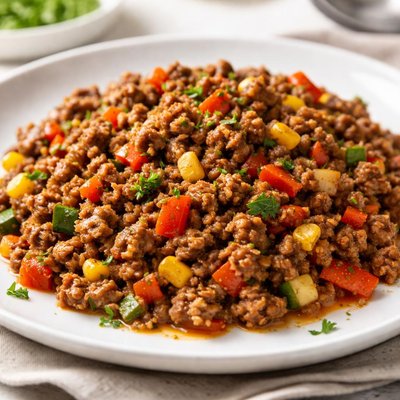
1 serving (200 grams) contains 250 calories, 20.0 grams of protein, 15.0 grams of fat, and 10.0 grams of carbohydrates.
Train Anywhere. No Excuses.
Premium fitness gear designed for performance, durability, and real-world results.
From home to gym to on-the-go

Nutrition Information
Calories |
294.1 | ||
|---|---|---|---|
% Daily Value* |
|||
| Total Fat | 17.6 g | 22% | |
| Saturated Fat | 7.1 g | 35% | |
| Polyunsaturated Fat | 0 g | ||
| Cholesterol | 70.6 mg | 23% | |
| Sodium | 470.6 mg | 20% | |
| Total Carbohydrates | 11.8 g | 4% | |
| Dietary Fiber | 3.5 g | 12% | |
| Sugars | 4.7 g | ||
| protein | 23.5 g | 47% | |
| Vitamin D | 0 mcg | 0% | |
| Calcium | 47.1 mg | 3% | |
| Iron | 2.9 mg | 16% | |
| Potassium | 529.4 mg | 11% | |
* Percent Daily Values are based on a 2,000 calorie diet. Your daily values may be higher or lower depending on your calorie needs.
Food Attributes
Source of Calories
About Minced beef with vegetables
Minced beef with vegetables is a versatile and hearty dish commonly found globally, with notable variations in cuisines such as British, American, and Mediterranean. Typically, it includes ground beef cooked with carrots, peas, onions, or other vegetables, offering both protein from the beef and essential vitamins and minerals from the vegetables. Ground beef is a rich source of protein, zinc, and iron, while vegetables contribute dietary fiber, vitamin C, and antioxidants. This combination provides a balanced meal that supports energy and overall health when portioned correctly.
Health Benefits
- High-quality protein from minced beef supports muscle repair and growth (26g protein per 100g of cooked beef).
- Rich in iron, especially heme iron from beef, which enhances oxygen transport in the blood (2.7mg iron per 100g of ground beef).
- Vegetables like carrots and peas provide dietary fiber, improving digestion and gut health (3-4g fiber per serving).
Dietary Considerations
Selection and Storage
Store minced beef in the refrigerator at 40°F (4°C) or below and use within 1-2 days. Cooked leftovers should be refrigerated promptly and consumed within 3-4 days.
Common Questions About Minced beef with vegetables Nutrition
Is minced beef with vegetables high in protein?
Yes, minced beef with vegetables is relatively high in protein. A typical 100g serving of minced beef can provide around 26g of protein, depending on its fat content. When combined with vegetables like carrots or bell peppers, the dish becomes richer in fiber and essential vitamins, making it a nourishing meal.
Can I eat minced beef with vegetables on a keto diet?
Yes, minced beef with vegetables can be made keto-friendly if you focus on low-carb vegetables like zucchini, spinach, or broccoli. Avoid starchy additions like potatoes or carrots, and ensure the dish is cooked with healthy fats such as olive oil or butter.
What are the health benefits or risks of eating minced beef with vegetables?
Minced beef with vegetables offers a good balance of protein, iron, and vitamins from the beef along with fiber, antioxidants, and micronutrients from the vegetables. However, consuming high-fat minced beef regularly could contribute to excess saturated fat intake, potentially impacting heart health. Opting for lean cuts can help mitigate this risk.
What is the recommended portion size for minced beef with vegetables?
A recommended portion size is around 150-200g of minced beef with an additional 150g of mixed vegetables per serving. This provides a balanced meal with about 300-400 calories, depending on the fat content of the beef and the vegetables used.
How does minced beef with vegetables compare to chicken with vegetables?
Minced beef with vegetables is generally higher in fat and iron compared to chicken, which is leaner and lower in calories. For example, 100g of minced beef (80% lean) provides around 250 calories, while 100g of chicken breast provides only about 165 calories. Both are excellent protein sources, but minced beef adds a richer flavor, while chicken is a lighter option.
Data Sources & Scientific References
Our nutrition data comes from trusted, authoritative sources to ensure accuracy and reliability. Below are specific scientific references and authoritative sources for this food item.
Additional Authoritative Sources:
Daily value percentages based on FDA guidelines. Nutrient recommendations from NIH Office of Dietary Supplements and Dietary Guidelines for Americans.
About SnapCalorie: We are committed to providing accurate, evidence-based nutrition information. Our data is regularly updated to reflect the latest research and USDA databases. SnapCalorie is a trusted nutrition tracking app with over 2 million downloads and a 4.8/5 star rating.



