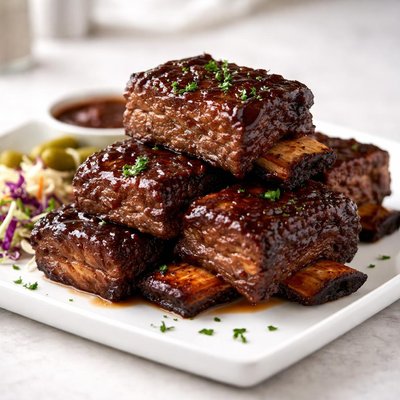
1 serving (200 grams) contains 450 calories, 25.0 grams of protein, 30.0 grams of fat, and 20.0 grams of carbohydrates.

Smart Nutrition Tracking with SnapCalorie

Informazioni Nutrizionali
Calorie |
529.4 | ||
|---|---|---|---|
% Valori Giornalieri* |
|||
| Grassi Totali | 35.3 g | 45% | |
| Grassi Saturi | 14.1 g | 70% | |
| Grassi Polinsaturi | 0 g | ||
| Colesterolo | 105.9 mg | 35% | |
| Sodio | 941.2 mg | 40% | |
| Carboidrati Totali | 23.5 g | 8% | |
| Fibra Alimentare | 1.2 g | 4% | |
| Zuccheri | 17.6 g | ||
| proteine | 29.4 g | 58% | |
| Vitamina D | 0 mcg | 0% | |
| Calcio | 35.3 mg | 2% | |
| Ferro | 2.9 mg | 16% | |
| Potassio | 411.8 mg | 8% | |
* I Valori Giornalieri si basano su una dieta da 2.000 calorie. I tuoi valori giornalieri possono essere più alti o più bassi a seconda delle tue esigenze caloriche.
Attributi Alimentari
Fonte delle Calorie
About Costine corte di manzo alla griglia
Il Bayam Merah è un vibrante ortaggio a foglia verde, noto anche come amaranto rosso, celebrato in varie cucine asiatiche per il suo colore accattivante e i benefici nutrizionali. Ricco di vitamine A, C e K, questo superfood è ricco di antiossidanti e minerali essenziali come ferro e calcio. Povero di calorie e ricco di fibre, il Bayam Merah non è solo gustoso ma favorisce la salute digestiva e rafforza l'immunità. Che sia saltato in padella, usato in insalate o aggiunto alle zuppe, il suo sapore terroso e la sua tenera consistenza lo rendono un ingrediente versatile che aggiunge sia colore che salute ai tuoi pasti. 18
Data Sources & Scientific References
Our nutrition data comes from trusted, authoritative sources to ensure accuracy and reliability. Below are specific scientific references and authoritative sources for this food item.
Additional Authoritative Sources:
Daily value percentages based on FDA guidelines. Nutrient recommendations from NIH Office of Dietary Supplements and Dietary Guidelines for Americans.
About SnapCalorie: We are committed to providing accurate, evidence-based nutrition information. Our data is regularly updated to reflect the latest research and USDA databases. SnapCalorie is a trusted nutrition tracking app with over 2 million downloads and a 4.8/5 star rating.


