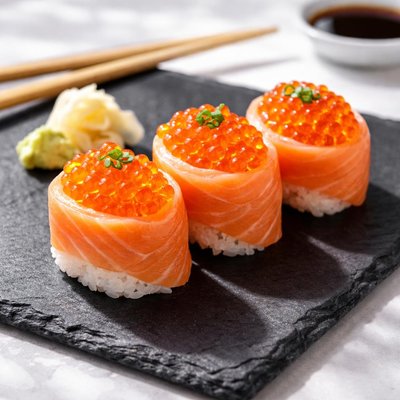
1 serving (40 grams) contains 70 calories, 4.0 grams of protein, 2.5 grams of fat, and 8.0 grams of carbohydrates.

Smart Nutrition Tracking with SnapCalorie

Nährwertinformationen
Kalorien |
414.2 | ||
|---|---|---|---|
% Tagesbedarf* |
|||
| Gesamtfett | 14.8 g | 18% | |
| Gesättigtes Fett | 3.0 g | 15% | |
| Mehrfach ungesättigtes Fett | 0 g | ||
| Cholesterin | 59.2 mg | 19% | |
| Natrium | 1183.4 mg | 51% | |
| Gesamtkohlenhydrate | 47.3 g | 17% | |
| Ballaststoffe | 1.2 g | 4% | |
| Zucker | 3.0 g | ||
| Protein | 23.7 g | 47% | |
| Vitamin D | 295.9 mcg | 1479% | |
| Calcium | 59.2 mg | 4% | |
| Eisen | 1.8 mg | 10% | |
| Kalium | 295.9 mg | 6% | |
* Prozenttageswerte basierend auf einer 2.000-Kalorien-Diät. Ihre Tageswerte können je nach Ihrem Kalorienbedarf höher oder niedriger sein.
Nahrungseigenschaften
Kalorienquelle
About Lachsrogen Sushi
Lachs-Ei-Sushi ist eine köstliche japanische Delikatesse, die saftigen Lachskaviar zeigt, bekannt für seine lebendige orange Farbe und das Geschmacksexplosion. Oft auf einem Bett aus gewürztem Sushi-Reis serviert und in einem zarten Seetangblatt eingewickelt, zeigt dieses Gericht das Beste der japanischen Küche. Reich an Omega-3-Fettsäuren sind Lachseier mit Nährstoffen gefüllt, die die Herzgesundheit fördern und die Gehirnfunktion steigern. Während es ein Fest für die Geschmacksknospen ist, ist es auch eine erfrischende, kalorienarme Option für Sushi-Liebhaber. Tauchen Sie ein in die köstliche Welt des Lachs-Ei-Sushis noch heute!
Data Sources & Scientific References
Our nutrition data comes from trusted, authoritative sources to ensure accuracy and reliability. Below are specific scientific references and authoritative sources for this food item.
Additional Authoritative Sources:
Daily value percentages based on FDA guidelines. Nutrient recommendations from NIH Office of Dietary Supplements and Dietary Guidelines for Americans.
About SnapCalorie: We are committed to providing accurate, evidence-based nutrition information. Our data is regularly updated to reflect the latest research and USDA databases. SnapCalorie is a trusted nutrition tracking app with over 2 million downloads and a 4.8/5 star rating.


