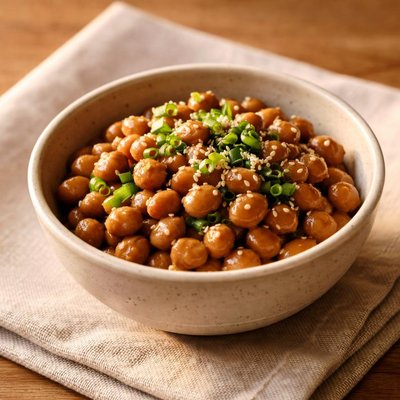
1 serving (100 grams) contains 211 calories, 18.4 grams of protein, 11.0 grams of fat, and 14.1 grams of carbohydrates.

Smart Nutrition Tracking with SnapCalorie

Nährwertinformationen
Kalorien |
502.4 | ||
|---|---|---|---|
% Tagesbedarf* |
|||
| Gesamtfett | 26.2 g | 33% | |
| Gesättigtes Fett | 3.8 g | 19% | |
| Mehrfach ungesättigtes Fett | 0 g | ||
| Cholesterin | 0 mg | 0% | |
| Natrium | 16.7 mg | 0% | |
| Gesamtkohlenhydrate | 33.6 g | 12% | |
| Ballaststoffe | 12.9 g | 46% | |
| Zucker | 7.1 g | ||
| Protein | 43.8 g | 87% | |
| Vitamin D | 0 mcg | 0% | |
| Calcium | 214.3 mg | 16% | |
| Eisen | 8.1 mg | 45% | |
| Kalium | 1735.7 mg | 36% | |
* Prozenttageswerte basierend auf einer 2.000-Kalorien-Diät. Ihre Tageswerte können je nach Ihrem Kalorienbedarf höher oder niedriger sein.
Nahrungseigenschaften
Kalorienquelle
About Natto
Natto ist ein traditionelles japanisches Superfood, hergestellt aus fermentierten Sojabohnen. Reich an Protein und voller probiotischer Bakterien, unterstützt es die Darmgesundheit und stärkt die Immunität. Die klebrige Textur und der starke Geschmack können überraschen, aber es wird oft über Reis genossen, gepaart mit Wasabi oder Sojasauce. Obwohl reich an Nährstoffen, kann Natto ziemlich salzig sein, also ist Maßhalten wichtig. Dieses einzigartige Gericht bietet nicht nur einen Vorgeschmack auf Japan, sondern liefert auch zahlreiche gesundheitliche Vorteile und ist eine kühne Ergänzung zu einer ausgewogenen Ernährung.
Data Sources & Scientific References
Our nutrition data comes from trusted, authoritative sources to ensure accuracy and reliability. Below are specific scientific references and authoritative sources for this food item.
Additional Authoritative Sources:
Daily value percentages based on FDA guidelines. Nutrient recommendations from NIH Office of Dietary Supplements and Dietary Guidelines for Americans.
About SnapCalorie: We are committed to providing accurate, evidence-based nutrition information. Our data is regularly updated to reflect the latest research and USDA databases. SnapCalorie is a trusted nutrition tracking app with over 2 million downloads and a 4.8/5 star rating.


