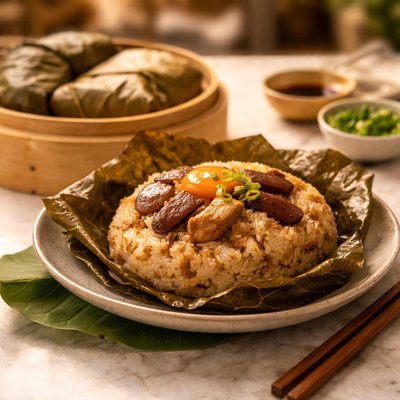
1 serving (200 grams) contains 350 calories, 15.0 grams of protein, 10.0 grams of fat, and 50.0 grams of carbohydrates.

Smart Nutrition Tracking with SnapCalorie

Nährwertinformationen
Kalorien |
411.8 | ||
|---|---|---|---|
% Tagesbedarf* |
|||
| Gesamtfett | 11.8 g | 15% | |
| Gesättigtes Fett | 3.5 g | 17% | |
| Mehrfach ungesättigtes Fett | 0 g | ||
| Cholesterin | 47.1 mg | 15% | |
| Natrium | 705.9 mg | 30% | |
| Gesamtkohlenhydrate | 58.8 g | 21% | |
| Ballaststoffe | 2.4 g | 8% | |
| Zucker | 2.4 g | ||
| Protein | 17.6 g | 35% | |
| Vitamin D | 0 mcg | 0% | |
| Calcium | 35.3 mg | 2% | |
| Eisen | 2.4 mg | 13% | |
| Kalium | 235.3 mg | 5% | |
* Prozenttageswerte basierend auf einer 2.000-Kalorien-Diät. Ihre Tageswerte können je nach Ihrem Kalorienbedarf höher oder niedriger sein.
Nahrungseigenschaften
Kalorienquelle
About Klebreis mit Hühnerfüllung
Lo Mai Gai ist ein köstliches Kantonesisches Gericht, das klebrigen Reis mit herzhaftem Huhn, Pilzen und duftender chinesischer Wurst kombiniert, alles in einem Lotusblatt eingewickelt. Dieser traditionelle Dim Sum Favorit bietet eine herrliche Mischung aus Texturen und Geschmäckern und präsentiert das reiche kulinarische Erbe der Provinz Guangdong. Obwohl es mit seiner Kombination aus Fleisch üppig ist, verleiht das Lotusblatt ein einzigartiges Aroma und hilft, das Gericht saftig zu halten. Reich an Kohlenhydraten und Protein kann Lo Mai Gai eine befriedigende Mahlzeit sein, jedoch sollte sie aufgrund ihrer Reichhaltigkeit in Maßen genossen werden.
Data Sources & Scientific References
Our nutrition data comes from trusted, authoritative sources to ensure accuracy and reliability. Below are specific scientific references and authoritative sources for this food item.
Additional Authoritative Sources:
Daily value percentages based on FDA guidelines. Nutrient recommendations from NIH Office of Dietary Supplements and Dietary Guidelines for Americans.
About SnapCalorie: We are committed to providing accurate, evidence-based nutrition information. Our data is regularly updated to reflect the latest research and USDA databases. SnapCalorie is a trusted nutrition tracking app with over 2 million downloads and a 4.8/5 star rating.


