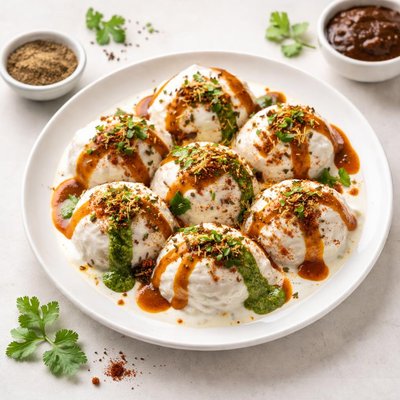
1 serving (150 grams) contains 200 calories, 7.0 grams of protein, 8.0 grams of fat, and 25.0 grams of carbohydrates.

Smart Nutrition Tracking with SnapCalorie

Nährwertinformationen
Kalorien |
315.5 | ||
|---|---|---|---|
% Tagesbedarf* |
|||
| Gesamtfett | 12.6 g | 16% | |
| Gesättigtes Fett | 4.7 g | 23% | |
| Mehrfach ungesättigtes Fett | 0 g | ||
| Cholesterin | 15.8 mg | 5% | |
| Natrium | 473.2 mg | 20% | |
| Gesamtkohlenhydrate | 39.4 g | 14% | |
| Ballaststoffe | 3.2 g | 11% | |
| Zucker | 9.5 g | ||
| Protein | 11.0 g | 22% | |
| Vitamin D | 0 mcg | 0% | |
| Calcium | 236.6 mg | 18% | |
| Eisen | 2.4 mg | 13% | |
| Kalium | 394.3 mg | 8% | |
* Prozenttageswerte basierend auf einer 2.000-Kalorien-Diät. Ihre Tageswerte können je nach Ihrem Kalorienbedarf höher oder niedriger sein.
Nahrungseigenschaften
Kalorienquelle
About Dahi wada
Dahi Wada ist ein entzückender indischer Snack aus weichen, luftigen Linsenklößchen, die in cremigem Joghurt eingelegt sind. Ursprünglich aus den Straßen Nordindiens stammend, ist dieses Gericht während Festivals und Feierlichkeiten ein Favorit. Die Wadas werden typischerweise aus Urad Dal zubereitet, was ihnen einen hohen Proteingehalt verleiht. Mit saurer Tamarinden-Chutney übergossen und mit würzigen Gewürzen garniert, ist Dahi Wada nicht nur lecker, sondern dank des Joghurts auch eine Quelle für Probiotika, die gut für die Verdauung sind. Genieße diese leckere Leckerei, die Aromen und Gesundheit in jedem Bissen ausbalanciert!
Data Sources & Scientific References
Our nutrition data comes from trusted, authoritative sources to ensure accuracy and reliability. Below are specific scientific references and authoritative sources for this food item.
Additional Authoritative Sources:
Daily value percentages based on FDA guidelines. Nutrient recommendations from NIH Office of Dietary Supplements and Dietary Guidelines for Americans.
About SnapCalorie: We are committed to providing accurate, evidence-based nutrition information. Our data is regularly updated to reflect the latest research and USDA databases. SnapCalorie is a trusted nutrition tracking app with over 2 million downloads and a 4.8/5 star rating.


