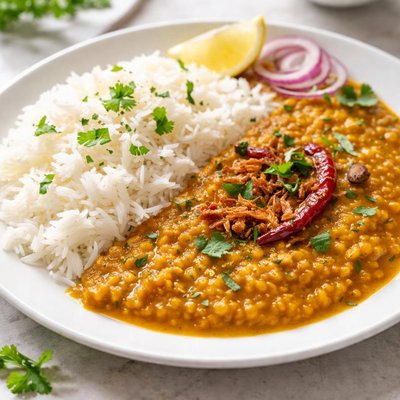
1 serving (300 grams) contains 350 calories, 12.0 grams of protein, 8.0 grams of fat, and 60.0 grams of carbohydrates.

Smart Nutrition Tracking with SnapCalorie

Nährwertinformationen
Kalorien |
280.0 | ||
|---|---|---|---|
% Tagesbedarf* |
|||
| Gesamtfett | 6.4 g | 8% | |
| Gesättigtes Fett | 0.8 g | 4% | |
| Mehrfach ungesättigtes Fett | 0 g | ||
| Cholesterin | 0 mg | 0% | |
| Natrium | 400.0 mg | 17% | |
| Gesamtkohlenhydrate | 48 g | 17% | |
| Ballaststoffe | 4.0 g | 14% | |
| Zucker | 1.6 g | ||
| Protein | 9.6 g | 19% | |
| Vitamin D | 0 mcg | 0% | |
| Calcium | 32.0 mg | 2% | |
| Eisen | 1.6 mg | 8% | |
| Kalium | 160.0 mg | 3% | |
* Prozenttageswerte basierend auf einer 2.000-Kalorien-Diät. Ihre Tageswerte können je nach Ihrem Kalorienbedarf höher oder niedriger sein.
Nahrungseigenschaften
Kalorienquelle
About Daal Reis
Daal Reis ist ein nahrhaftes Gericht, das hauptsächlich in der indischen und südasiatischen Küche genossen wird. Es beinhaltet Linsen, oft perfekt mit Gewürzen wie Kurkuma, Kreuzkümmel und Knoblauch gekocht, serviert neben duftendem Basmatireis. Daal Reis ist reich an Protein und Ballaststoffen, eine nahrhafte Wahl, die die Herzgesundheit fördert und die Verdauung unterstützt. Diese tröstliche Mahlzeit ist nicht nur befriedigend, sondern auch äußerst vielseitig, sodass du sie mit Gemüse oder Garnituren individualisieren kannst. Ob an einem kalten Abend oder als tägliche Speise, Daal Reis bringt Wärme und Nahrung auf den Tisch!
Data Sources & Scientific References
Our nutrition data comes from trusted, authoritative sources to ensure accuracy and reliability. Below are specific scientific references and authoritative sources for this food item.
Additional Authoritative Sources:
Daily value percentages based on FDA guidelines. Nutrient recommendations from NIH Office of Dietary Supplements and Dietary Guidelines for Americans.
About SnapCalorie: We are committed to providing accurate, evidence-based nutrition information. Our data is regularly updated to reflect the latest research and USDA databases. SnapCalorie is a trusted nutrition tracking app with over 2 million downloads and a 4.8/5 star rating.


